How to Aim a Pistol with Iron Sights or a Red Dot Sight 2025

Red dot sights are changing the way shooters aim pistols in today’s world. Most handgun manufacturers now include mounting options for red dot sights on at least one model. A properly zeroed red dot sight helps shooters place their shots more accurately and consistently. Traditional iron sights still prove useful – they can be quicker at close ranges of 5 meters. Shooters achieve an Alpha hit in just 0.69 seconds with iron sights compared to red dots. This speed difference plays a key role when shooters learn to aim pistols in different scenarios.
The choice between iron sights and red dots goes beyond personal preference. Red dots let shooters keep both eyes open and perform well in any lighting condition. These sights make target acquisition easier in dim light where regular handgun sights often fall short. Experts predict that “in five years, seeing a pistol without an RDS outside of competition will be like seeing an AR without an optic on it”. This makes it crucial for pistol owners to master both sighting systems.
Understanding Iron Sights and Red Dot Sights
Iron sights are the oldest pistol aiming system that dates back to 1450. They use two physical parts to line up shots. These simple sighting systems have a front sight post near the muzzle and a rear sight with a notch or gap. Shooters must line up the front sight within the rear sight’s notch. They need to focus on the front sight instead of the target. This method, known as “sight alignment” and “sight picture,” creates the foundation of traditional pistol marksmanship.
Red dot sights work differently. They project a colored dot (usually red or green) onto a special lens in your line of sight. The system reflects an LED light off an angled glass piece that’s coated to reflect only the colored light. This creates a reticle that seems to float on your target. You don’t need to line up multiple sight parts, just put the dot where you want to hit. Each system has its own strengths. Iron sights are reliable because they work in all weather conditions. They need no batteries and are almost indestructible when made well. They are also lighter, cheaper, and have a slimmer profile for concealed carry. All the same, iron sights are hard to use in low light and you need more training to use them well.
Red dot sights help you find targets faster and let you shoot with both eyes open. This gives you better awareness of what’s around you. They work great for shooters with aging eyes since you focus on the target instead of the front sight. These benefits come with some downsides like needing batteries and higher costs. Good red dot sights usually range from $300-$700 based on features. Red dots also make pistols bulkier, which can make concealed carry harder. You can see how they perform differently in various shooting scenarios. At very close range (5 meters), shooters with experience often shoot faster with iron sights. But beyond 10-15 meters, red dots show clear advantages in precision and speed. Red dots work much better than iron sights in low-light conditions. Bright sunlight can sometimes make it hard to see the dot or affect lens clarity.
How to Aim a Pistol with Each Sight Type
You need to become skilled at proper aiming technique with different sight types to achieve consistent accuracy with a pistol. Each sight system needs specific approaches to maximize its advantages.
How To Aim a Pistol With 3 Dot Sights
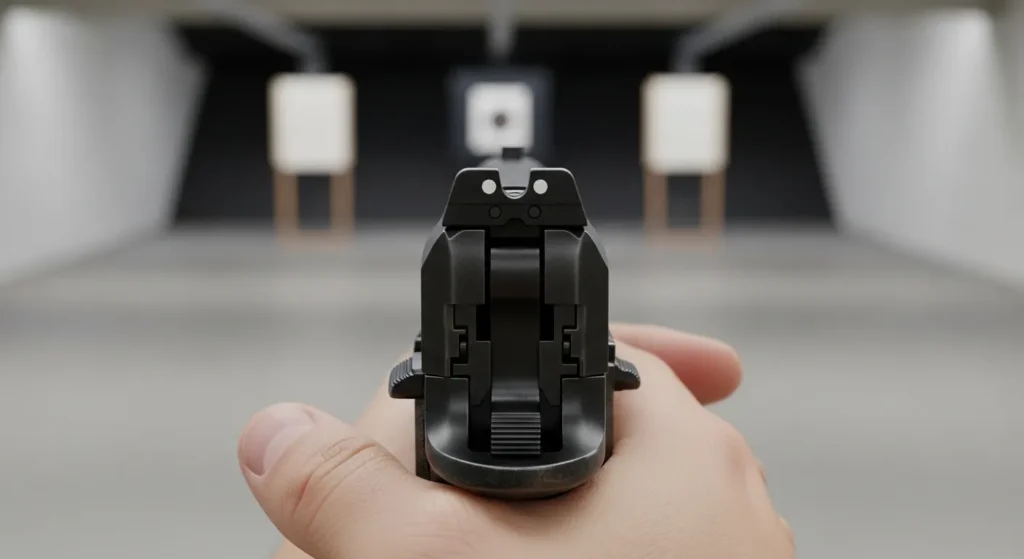
Three-dot iron sights need proper alignment to shoot accurately. Start with a stable stance – keep your feet shoulder-width apart with slightly bent knees. The three dots should line up horizontally with equal spaces between them to aim properly. Make sure the front sight stays centered between the two rear dots. Your focus should stay on the front sight instead of the target.
Two common holds exist for sight picture: center hold and combat (six o’clock) hold. Center hold means the front sight splits the target’s center. Combat hold means the front sight covers the target completely. Different manufacturers design their sights differently – SIG Sauer pistols work with combat hold, while GLOCK pistols work with center hold.
How To Aim a Pistol Using a Red Dot Sight
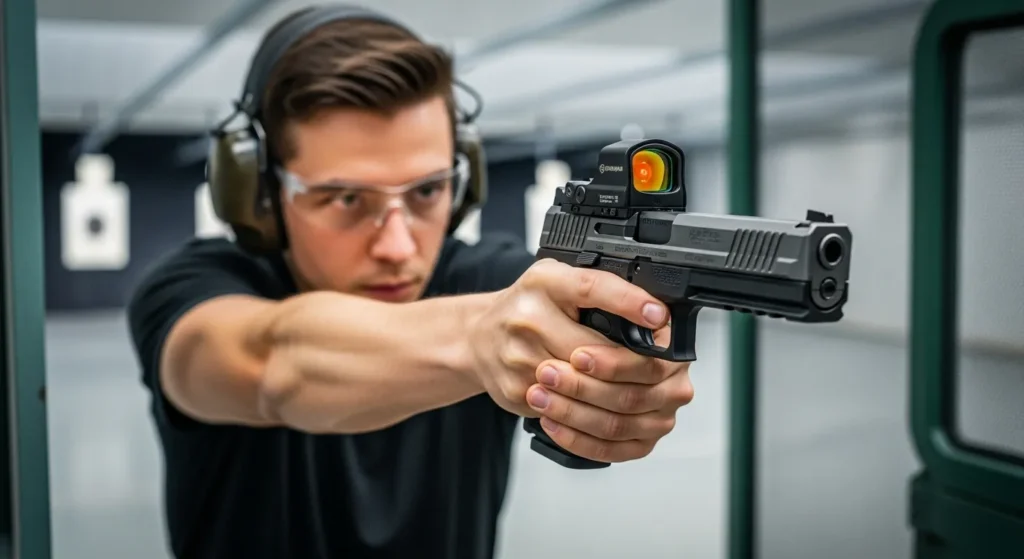
Red dot sights make aiming easier because you don’t need to line up multiple sight components. Just put the dot on your target and pull the trigger while keeping the dot steady. Red dots let you keep focus on the target – experts call this technique “hard target focus”. The dot should look like it floats on your target. Your dominant eye will pick up the reticle and your non-dominant eye sees everything else, so keep both eyes open. This gives you a wider field of view and better situational awareness.
How to Sight in a Red Dot on a Pistol
A properly zeroed red dot sight will give you accuracy. Pick your zero distance first – 10, 15 or 25 yards work well, but 15 yards suits most situations. Use a pistol rest in a stable shooting position to eliminate human error. Start zeroing by shooting a small group at your chosen distance. Notice where your shots land compared to your aim point. Adjust windage (horizontal) and elevation (vertical) based on this group. At 10 yards, approximately 20 clicks moves the impact point 1 inch.
Common Aiming Mistakes and How to Fix Them
These common errors affect accuracy whatever sight type you use:
- Inconsistent trigger control – Use smooth, even pressure throughout the pull stroke instead of jerking.
- Flinching – You might dip because you’re anticipating recoil. Try dry-firing and the “ball and dummy” technique to spot this issue.
- Poor follow-through – Keep your shooting position after firing. Don’t look immediately to see where your shot landed.
- Improper stance – Don’t lean backward. Lean slightly forward in a “nose-over-toes” stance to handle recoil better.
Performance in Real-World Scenarios
Real-life shooting scenarios just need different skills than range practice. You can make a critical difference when seconds count by becoming skilled at practical pistol aiming techniques.
How to Aim a Pistol Quickly Under Stress
Your body experiences sympathetic responses that affect motor skills under stress. Most shooters instinctively tighten their grip on both weapon and light source through bilateral contraction. You can counter this natural response by practicing “flash-shoot-step-move” routines that add movement after shooting. FBI statistics show most lethal encounters occur in low light, average 3 shots, and end in just 3 seconds. Firearms Training should match these conditions. Keep proper form despite stress, don’t chase perfect shot groupings because they waste precious time in real confrontations.
Accuracy At Close, Medium, and Long Range
Iron sights often give faster first shots at very close ranges (under 5 meters), despite red dots’ overall advantages. Beyond 10 yards, all the same, red dot sights consistently provide better accuracy. Shooters can misjudge the correct aiming point by several inches with any sight type as light conditions change. Light overcast gives probably the best shooting conditions with minimal glare. Scattered clouds create the most challenging environment because rapid light changes tire the eyes.
Low-light and Bright-light Performance
Traditional iron sights don’t work well in darkness unless they have tritium inserts, though these can become too bright under night vision. Expert instructors say plain iron sights with a green laser grip work best in low-light conditions. Mounted lights between 300-600 lumens work well for most pistol applications in bright conditions. Brighter lights risk blinding the shooter temporarily, especially indoors. Weapon-mounted lights let you control the weapon with both hands but make you an obvious target. Handheld lights let you use “misdirection” techniques to confuse adversaries.
Using Both Eyes Open For Better Awareness
Keeping both eyes open helps maintain complete field of vision and protects you from secondary threats. You lose half your peripheral vision by closing one eye—a dangerous choice in potential confrontations. Cross-dominant shooters should use their nose’s septum as a dividing line. Bring the pistol toward your dominant eye side without cocking your head or canting the pistol. This technique helps you maintain a relaxed form while using your dominant eye’s better spatial recognition. Red dot sights work great with both-eyes-open shooting because you don’t need to align multiple sight components.
Training Tips and Expert Advice
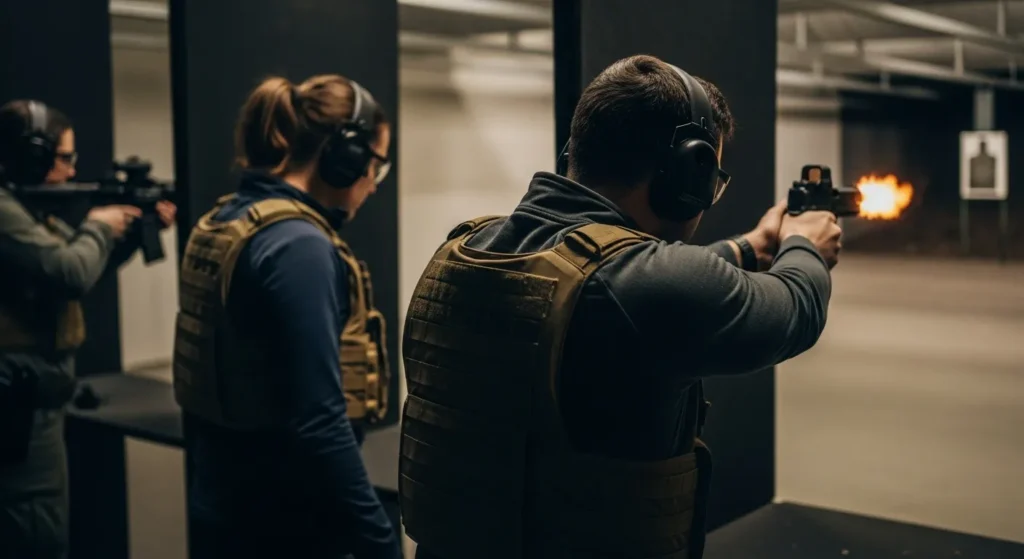
Consistent practice is the foundation of pistol shooting proficiency. A well-laid-out training approach helps shooters develop reliable skills with any sighting system.
Dry Fire Drills for Better Presentation
Dry fire practice (shooting without ammunition) builds fundamentals without using rounds. The presentation drill starts from a compressed low ready position with both hands on the gun. Your original par time should be 1 second. Bring the weapon up to your dominant eye and eliminate extra movements. The coin trick shows trigger control problems right away – balance a quarter on your front sight while pressing the trigger.
Live Fire Exercises to Track the Dot
The “Extended Prep and Press” drill helps you become skilled at dot tracking during live practice. Fire three rounds at 7 yards from a compressed position and keep the dot visible during recoil. You can also cover your red dot lens with tape temporarily. This forces you to focus on the target instead of the dot.
Expert Quote: ‘Let the dot float, don’t chase it’
“Work less as you transition,” notes one expert. “When the dot is on target, shoot the gun. It’s that simple”. This mindset stops you from overcorrecting while trying to perfectly stabilize the dot.
Should You Co-witness With Iron Sights?
Co-witnessing (seeing iron sights through the red dot window) gives you backup if your optic fails. The best approach is to train with both systems independently and alternate between sights during practice sessions.
How To Build Muscle Memory For Fast Target Acquisition
Muscle memory comes from methodical repetition. Break down movements into segments. Practice slowly until perfect, then gradually increase your speed. Clear instruction and repetitive drills improve your flow, timing and precision.
Key Takeaways
- Master both iron sights and red dot systems to become a versatile shooter, as each excels in different scenarios and conditions.
- Iron sights are faster at close range (under 5 meters) but red dots dominate beyond 10 yards with superior accuracy and speed • Red dots allow both-eyes-open shooting for better situational awareness, while iron sights require no batteries and work in all conditions.
- Focus on the front sight with iron sights, but maintain target focus with red dots, let the dot “float” rather than chase perfect alignment.
- Practice dry fire drills and live fire exercises regularly to build muscle memory for fast, accurate target acquisition under stress.
- Proper zeroing at 15 yards provides versatility for most applications, with approximately 20 clicks moving impact 1 inch at 10 yards
The key to effective pistol shooting isn’t the sighting system you choose, but consistent practice with proper fundamentals. Whether using traditional iron sights or modern red dots, mastering trigger control, stance, and follow-through will dramatically improve your accuracy and confidence in real-world scenarios.
Embark on your journey with Suburban Protector, where safety and skill converge to elevate your shooting experience. Practice, learn, and above all, enjoy the journey of becoming a better shooter. Call us today at 561-213-2974 or email us at Mike@SuburbanProtector.com. You can also follow us on Instagram @SuburbanProtector or Youtube https://www.youtube.com/@SuburbanProtector.
We proudly serve West Palm Beach, Boca Raton, Boynton Beach, Delray Beach, Jupiter, Palm Beach Gardens, Lake Worth Beach, Riviera Beach, Greenacres, Wellington, Royal Palm Beach, Stuart, Sewall’s Point, Jupiter Island, Ocean Breeze,Fort Pierce, Port St. Lucie, St. Lucie Village, and Okeechobee.
Conclusion
Shooters must know how to aim their pistols well, whatever sighting system they prefer. This piece explores both traditional iron sights and modern red dot sights. Each has its own advantages based on shooting context and what works best for you. Iron sights give you reliability and work well at close range. Red dot sights shine at longer distances and in low light, letting you stay more aware of your surroundings. Good training levels the playing field between these sighting systems. Even the best red dot sight can’t make up for poor basics or sloppy trigger control. Time spent on dry fire and live fire exercises improves your accuracy and speed by a lot with either sight type.
Your specific shooting needs should guide your choice between iron sights and red dots. Without doubt, red dot technology keeps getting better and more popular with all types of shooters. Notwithstanding that, iron sight skills are the foundations of good marksmanship and serve as backup when electronic sights fail. On top of that, knowing each sight system’s strengths and limits helps shooters pick what’s best for their needs – competition, self-defense, or fun at the range. Regular practice in different conditions builds confidence and muscle memory for ground application. Light levels, distances, and stress all play a part. The shooting world accepts new ideas, but marksmanship basics stay the same. Shooters who master the simple stuff while learning new tech set themselves up for success with any sight system. Being able to aim well under pressure, stay focused, and use proper technique will always beat any tech advantage.