
Bullet Caliber Types: Pistol and Handgun Calibers Easy Guide
By Mike Kneuer, Suburban Protector

Bullet calibers are crucial to understanding firearms. The 9mm bullet has the same diameter as .380 and .38 Special rounds. These rounds perform differently despite their similar size, which shows why knowing caliber differences is important. A firearm’s caliber tells you the diameter of the bullet it fires. The tiny .22LR leads the market in sales, while the powerful .45 caliber has “proven itself time and time again”. Bullets like the .308″ are wider than smaller ones such as the .22″.
The caliber measurement alone doesn’t reveal everything about a round’s speed or power. Bullets come in four main sizes: miniature-bore, small-bore, medium-bore, and large-bore. Your choice of caliber should match your intended use, priorities, and experience level.
Understanding Bullet Caliber and Size

A firearm’s barrel internal diameter defines its caliber, a basic concept every shooter should know. This knowledge helps select the right ammunition and understand how firearms work.
What Are Calibers in Firearms?
The internal diameter of a gun barrel determines its caliber, specifically the bore diameter. This measurement tells us what size bullets can safely fire through the weapon. People who say they carry a “.380” or a “9mm” refer to both their bullet size and barrel diameter. Calibers come in four main categories: miniature-bore (0.22 inches or smaller), small-bore (up to 0.32 inches), medium-bore (0.33 to 0.39 inches), and large-bore (0.40 inches or larger). Popular handgun calibers include .22LR, .380 ACP, 9mm, and .45 ACP.
How Bullet Size is Measured
Bullet measurements use both imperial and metric systems. Americans express caliber in inches (like .45 caliber), while other countries use millimeters (9mm). A unit called “grain” measures bullet and gunpowder weight, and 7,000 grains equal one pound.
Manufacturers measure rifled barrels in two ways:
- From the high points (lands) of the rifling
- Between the low parts (grooves)
U.S. cartridge designations commonly use groove measurements, while other countries prefer land measurements. Bullets are slightly larger than their intended bore to grip the rifling properly.
Caliber vs Cartridge: What’s The Difference?
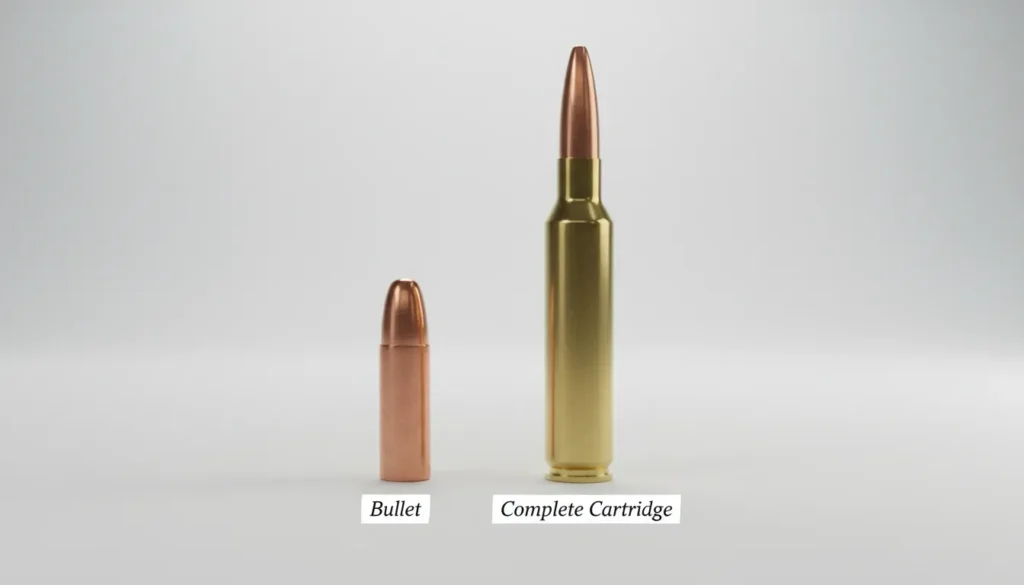
Shooters often say “caliber” when they mean “cartridge”. These terms mean different things. A cartridge includes the complete ammunition package, bullet, case, powder, and primer. The bullet is just the projectile. Case length appears as the second number in ammunition sequences like 7.62x51mm. This measurement shows the cartridge’s length beyond the bullet diameter. Two rounds might share caliber designations but remain incompatible if their case lengths differ.
Expert instructors at Suburban Protector Firearms Training Academy in Florida can help you choose the right caliber based on your needs.
Types of Handgun Calibers Explained
Handgun enthusiasts can choose from many pistol calibers, each with unique features that suit different shooting needs. Let’s get into the most common handgun calibers and what makes them special.
.22LR: The Beginner’s Round
The .22LR stands out as an extremely popular choice that’s easy to shoot with minimal recoil and quiet operation. It reaches typical velocities of 1,080-1,200 fps with 40-grain bullets. This round works great for target practice and small varmint hunting. While it’s not enough for self-defense, shooters can develop their fundamental skills at a lower cost.
.380 ACP: Compact and Light
The .380 ACP, also called 9mm Short, hits 950-1,100 fps velocity with 85-95 grain bullets. Many prefer it for concealed carry pistols because it combines manageable recoil with close-range effectiveness. Modern bullet designs have substantially improved its defensive capabilities, despite ongoing debates about stopping power.
9mm Luger: The All-Rounder
The 9mm Parabellum has become the world’s most prominent handgun caliber. It balances power, capacity, and controllability perfectly. Law enforcement agencies and military units love its flat trajectory and moderate recoil. The round’s affordability and diverse ammunition options make it perfect for defense and competition.
.40 S&W: Law Enforcement Favorite
Law enforcement developed the .40 S&W which generates between 350-500 foot-pounds of energy. This is a big deal as it means that standard 9mm loadings. Many agencies now prefer 9mm due to .40’s snappier recoil and increased firearm wear, despite its superior stopping power.
.45 ACP: Heavy and Powerful
The .45 ACP creates wide wound channels with its heavy bullet, reaching muzzle velocities around 850 fps. People value its “staying power” even with lower capacity than smaller calibers. Shooters can achieve impressive precision at 25 yards thanks to its inherent accuracy.
.38 Special: Classic Revolver Round
This balanced revolver cartridge combines mild recoil with solid stopping power. Wheel gun enthusiasts appreciate its accuracy and manageable recoil. The .38 Special excels in both defensive use and target shooting.
.357 Magnum: High Power Revolver
The .357 Magnum packs substantially more punch than the .38 Special and can fire both calibers. Small revolvers might kick hard, but this versatile round works great for self-defense and hunting.
10mm Auto: High Velocity Option
The 10mm Auto delivers impressive power, nearly twice that of 9mm, while staying accurate. It matches or beats .357 Magnum energy levels. This makes it perfect for hunting and defense against large predators, yet skilled shooters can control it well in proper firearms. Suburban Protector Firearms Training Academy in Florida provides individual-specific guidance to help you pick the right caliber.
Bullet Types and Their Uses

Selecting the right ammunition requires a good understanding of bullet types. The projectile design has a substantial effect on performance and application, beyond just bullet calibers.
Full Metal Jacket (FMJ)
FMJ bullets feature a soft lead core that’s fully encased in a harder metal jacket, usually copper. The military’s original design ensures these bullets feed reliably in semi-automatic firearms. FMJ ammunition works best for target practice because it’s affordable and performs consistently. These rounds can over-penetrate targets and cause collateral damage beyond their intended target.
Hollow Point (HP)
Hollow point bullets contain a cavity at the tip that expands on impact to create a larger wound channel. This expansion moves more energy to the target and reduces risks of over-penetration. HP ammunition excels at self-defense and hunting, though it costs more than FMJ options.
Ballistic Tip
Ballistic tip ammunition merges FMJ aerodynamics with HP stopping power. A polymer tip fills the hollow cavity to enhance flight characteristics and start controlled expansion on impact. The smooth polymer tip resists deformation in magazines and comes color-coded by caliber.
Soft Point
Soft point bullets expose the lead core at the tip and balance penetration with expansion. These bullets expand slower than hollow points, which makes them perfect for hunting large game with tough hides. Soft points penetrate better than hollow points and expand more than FMJ.
Open Tip Match (OTM)
OTM bullets aren’t meant to expand like hollow points, despite their looks. The small opening comes from manufacturing, lead gets inserted from the front with ogival forming from the tip. This process creates highly consistent bullets that maximize accuracy for precision shooting.
Frangible Bullets
Frangible ammunition uses compressed powdered metals that break apart when hitting hard surfaces. These bullets minimize ricochet risks and over-penetration concerns, which makes them perfect for steel-target shooting and close-quarters training. They remain effective against soft targets even though they fragment against hard ones.
Suburban Protector Firearms Training Academy in Florida offers individual-specific guidance to help you select the right ammunition for your needs.
Choosing the Right Caliber for Your Needs
Choosing the right pistol caliber means finding the sweet spot between several real-world factors that match your needs. What works best changes substantially from one shooter to another.
Self-Defense vs Target Shooting
Self-defense situations need ammunition with enough stopping power that won’t go through walls. Target shooting is different, you want affordable rounds that feel good to shoot for hours. Full Metal Jacket (FMJ) rounds cost less but they tend to pass through targets, which makes them a poor choice for self-defense. We used Jacketed Hollow Points (JHP) for defense because they expand when they hit, creating bigger wound channels with less chance of going through the target.
The most common self-defense calibers are 9mm Luger, .40 S&W, .45 ACP, and .357 Magnum. The .22 LR is a great match for budget-friendly target practice.
Recoil and Control Considerations
Your shooting accuracy depends heavily on how well you handle recoil. Most shooters start to struggle with recoil at the time it hits around 15 ft-lbs. The math is simple – a gun that’s 25% heavier cuts recoil by 25%. The 9mm gives you the best of both worlds, manageable recoil and enough power that works well for most shooters. Smaller guns kick harder even with lighter rounds because they weigh less.
Ammo Availability and Cost
The 9mm Luger leads the pack with 18.20% of handgun ammo sales. This is a big deal as it means you’ll find it everywhere and pay less, about $0.36 per round. The .22 LR costs just $0.10 per round, while top-tier defensive rounds can run over $1.00 each.
Handgun Size and Capacity
Smaller bullets mean more rounds in your magazine. To name just one example, see how 9mm handguns usually pack 15+ rounds, while .45 ACP pistols typically hold 8-10. If you have a concealed carry weapon, the .380 ACP hits the sweet spot between size and stopping power.
Legal and Regional Restrictions
Federal law says you must be 21 or older to buy handgun ammunition. On top of that, some states add their own rules. Connecticut, Illinois, Massachusetts, and New Jersey ask for permits. To get expert advice on picking the perfect caliber that matches your specific needs, stop by Suburban Protector Firearms Training Academy in Florida.
Want to Learn More? Come Shoot With Me.
At Suburban Protector, we don’t just sell you on gear—we help you become confident with your firearm, no matter your experience level. I love helping new shooters figure out what works for them and watching that “aha!” moment when things start to click.
If you’re in South Florida and looking for firearms training that’s approachable, judgment-free, and highly effective, let’s get together and make it happen. You bring your curiosity—I’ll bring the knowledge and a few different calibers to try out.
Stay safe, stay sharp,
Mike
Need help deciding what caliber is right for you?
👉 Mike@SuburbanProtector.com or 561-213-2974 to schedule a beginner-friendly session today.