Mastering Defensive Shooting Skills for Personal Protection

Defensive shooting skills are essential for anyone who wants to protect themselves and their loved ones. Unlike target shooting or competitive shooting, defensive shooting is about stopping a threat quickly and safely. It is not about winning points or scoring hits on a target. Instead, the focus is on accuracy, speed, and situational awareness in high-pressure situations. Whether you carry a firearm for personal protection, home defense, or concealed carry, understanding and practicing these shooting skills can make a critical difference if a threat arises.
What Are Defensive Shooting Skills
Defensive shooting skills are the abilities and techniques used to respond effectively in real-life self-defense situations. These skills include drawing your firearm, aiming, firing accurately under stress, moving safely, and using cover. This also involves making quick decisions while staying aware of your surroundings. The goal is to neutralize a threat while minimizing risks to yourself and others. Many people focus only on accuracy at the range, but defensive shooting emphasizes situational awareness, movement, and tactical thinking in addition to marksmanship.
Master the Core Fundamentals
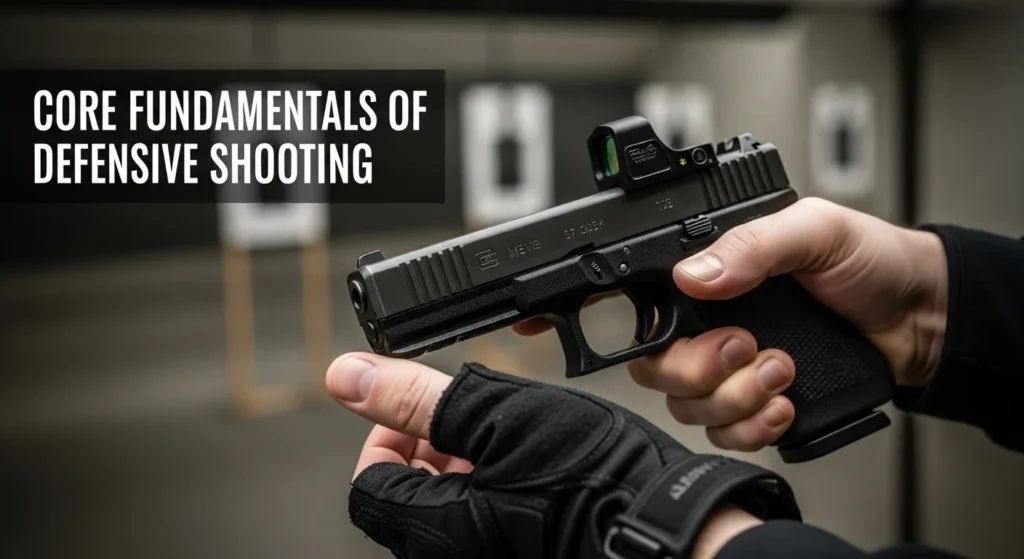
The foundation of defensive shooting skills starts with mastering the basics. Practicing these fundamentals regularly ensures accuracy, speed, and confidence in real-life situations. Each component is essential for safe and effective firearm use.
Proper Grip
A proper grip is the first step in controlling your firearm. Use a firm two-handed grip to reduce recoil and maintain stability. Keep your support hand high on the grip to push forward while your strong hand pulls slightly back. A solid grip helps with accuracy, follow-up shots, and overall control during stressful situations. Practicing your grip until it becomes second nature is crucial for defensive shooting.
Stance and Balance
Your stance affects both stability and mobility. A stable stance allows you to absorb recoil while maintaining balance. Popular defensive stances include:
- Isosceles Stance: Both arms extended equally, feet shoulder-width apart, offering a balanced and natural shooting position.
- Weaver Stance: Strong-side foot slightly back, support hand pulling slightly rearward, providing extra control for recoil management.
- Fighting Stance: A more athletic stance, allowing quick lateral movement and adaptability in dynamic situations.
Practicing different stances helps you react appropriately to various defensive scenarios.
Sight Alignment
Sight alignment is critical for hitting your target consistently. Focus on aligning the front and rear sights while keeping the target in view. Maintaining proper sight alignment under stress ensures that your shots land where intended. Even small deviations can reduce effectiveness, especially at close range where defensive shooting occurs.
Trigger Control
Smooth and consistent trigger control prevents jerking or flinching, which can throw off your aim. Apply steady pressure directly backward on the trigger until the shot fires. Avoid slapping the trigger, as this can reduce accuracy. Trigger control works hand-in-hand with grip, stance, and sight alignment to make each shot effective.
Daily Practice
Daily practice of fundamentals builds muscle memory and confidence. Dry-fire exercises, combined with live-fire training, reinforce proper grip, stance, sight alignment, and trigger control. The more you train these fundamentals, the more naturally they will come in real-life situations, helping you react quickly and safely under pressure.
Build Consistent Training Habits
Regular training is key to maintaining and improving defensive shooting skills. Make practicing a habit by incorporating both live-fire sessions and dry-fire exercises. Focus on drills that include drawing from your holster, transitioning between targets, and controlled trigger presses. Dry-fire practice at home can reinforce proper grip, sight alignment, and trigger control without using live ammunition. Consistent practice as a habit ensures that your body reacts correctly in high-stress situations and reduces hesitation when seconds matter.
Improve Speed Without Losing Accuracy
In defensive shooting, speed is important, but accuracy should never be sacrificed. Start by practicing slowly to ensure precision. As your accuracy improves, gradually increase speed. Timed drills help simulate real-life stress and decision-making requirements. For example, setting a target timer or doing repeated draw-and-fire drills can train you to respond quickly while maintaining control. Combining speed and accuracy prepares you for situations where rapid shots may be necessary to stop a threat effectively.
Develop Strong Situational Awareness
Situational awareness is a crucial part of defensive shooting skills. Always be mindful of your surroundings, whether you are at home, work, or in public spaces. Identify potential threats, exits, and obstacles that could help or hinder your defense. Being aware allows you to anticipate danger and make better decisions under stress. A person who is aware of their environment has more options for avoidance or escape before a confrontation becomes unavoidable. Defensive shooting is as much about preparation and awareness as it is about firing accurately.
Train for Realistic Scenarios
Scenario-based training is critical for developing effective defensive shooting skills. Practice shooting from different positions, such as standing, kneeling, or prone, to simulate real-world encounters. Incorporate movement drills and use available cover during practice. Training in low-light conditions prepares you for situations where visibility is limited, which is common in home defense or night-time incidents. Scenario training also helps develop split-second decision-making and reinforces safe handling habits under pressure.
Understand Defensive Ammunition Choices
Choosing the right ammunition is an important aspect of personal protection. Defensive ammunition is designed to expand upon impact, providing effective stopping power while minimizing the risk of over-penetration. Hollow-point bullets are commonly recommended for self-defense, as they deliver controlled expansion. Selecting ammunition that matches your firearm and practicing with it regularly ensures that you are comfortable and confident with its performance. Proper ammunition selection complements your defensive shooting skills and improves overall effectiveness.
Legal Responsibilities and Ethical Decision Making
Before using a firearm in self-defense, it is essential to understand local laws and regulations. Laws vary by state and often include rules about when the use of deadly force is justified. Defensive shooting is not just about skill; it also requires ethical decision-making. Understanding shoot-or-don’t-shoot scenarios is vital. Firearm owners should be aware that they may need to justify their actions legally. Training in compliance with state laws, such as Florida CCW laws, ensures responsible and lawful use of your defensive shooting skills.
Personal Protection Mindset
A strong defensive mindset is as important as technical skills. Staying calm during high-stress situations allows you to think clearly and make sound decisions. Avoid confrontation whenever possible and use de-escalation techniques when appropriate. Confidence built through consistent training helps reduce panic and hesitation. A well-prepared shooter understands that awareness, preparation, and proper defensive shooting skills work together to provide personal safety.
Common Mistakes to Avoid
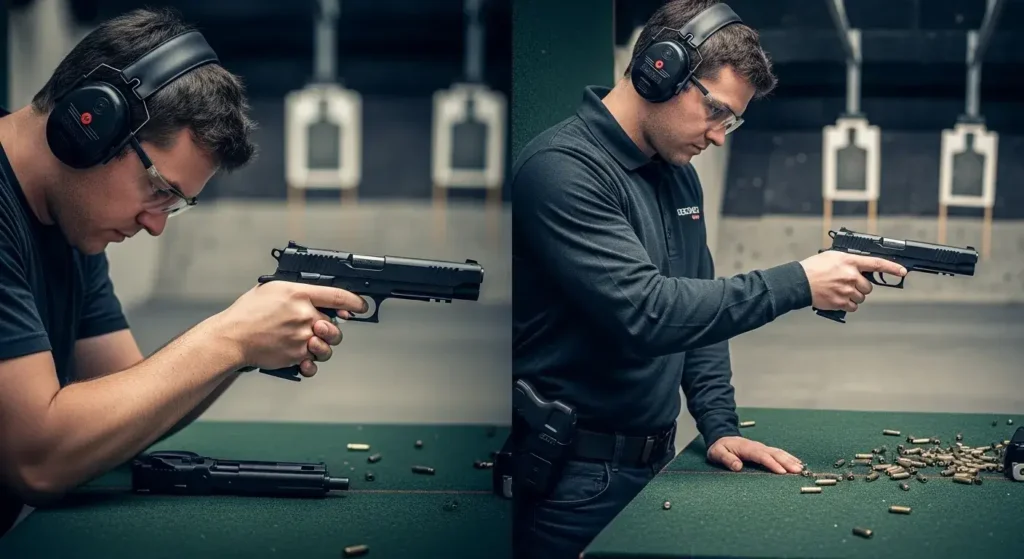
Even experienced shooters make mistakes. Identifying and correcting these errors is crucial for improving defensive shooting skills.
Poor Grip
A weak or inconsistent grip reduces control and accuracy. Make sure your strong hand pulls slightly back while your support hand pushes forward. Practicing proper grip as a habit helps manage recoil and improves follow-up shots.
Slow or Fumbling Draws
Taking too long to draw your firearm can cost precious seconds in a defensive scenario. Practice smooth, consistent draws from your holster until it becomes automatic. Dry-fire exercises can reinforce proper technique safely.
Tunnel Vision
Focusing only on your target can cause you to miss other potential threats. Develop situational awareness by scanning your surroundings while maintaining readiness to act. Avoid tunnel vision to stay safe in dynamic situations.
Neglecting Situational Awareness
Being unaware of your environment increases risk. Always observe exits, cover, and potential hazards. Train yourself to make situational awareness a habit during every practice session.
Using the Wrong Ammunition
Using ammunition not suited for personal defense can reduce effectiveness. Choose reliable self-defense rounds designed for proper expansion and penetration. Regularly review and test your chosen ammunition to ensure it performs as expected.
Overestimating Skill or Rushing Shots
Confidence is good, but overestimating your skill can be dangerous. Avoid rushing your shots, and focus on accuracy first. Consistent practice, combined with reflection on past mistakes, builds safer and more effective defensive shooting skills.
Helpful Drills to Practice
Practical drills help develop both skill and confidence. Start with two-shot precision drills to maintain accuracy under pressure. Practice drawing from concealment quickly and safely. Controlled pairs and multiple follow-up shots teach you to maintain speed and accuracy. Low-light identification drills improve your ability to spot threats while managing your firearm safely. Incorporating these drills into regular training sessions strengthens your defensive shooting skills and prepares you for real-world encounters, and you can experience this hands-on training firsthand at Suburban Protector, where our instructors guide you every step of the way.
Tools and Gear to Support Training
Using the right gear enhances defensive shooting skills. Quality holsters ensure safe and quick access to your firearm. Eye and ear protection are essential for safety during training. Weapon lights and spare magazines support effective performance in different conditions. Choosing reliable targets, timers, and practice tools allows you to track progress and identify areas that need improvement. Training with the gear you will use in real situations builds confidence and competence.
Conclusion
Defensive shooting skills are essential for personal protection and responsible firearm ownership. Developing these skills requires consistent practice, mastering the fundamentals, and balancing speed with accuracy. Situational awareness, realistic scenario training, and proper ammunition selection are critical to effective self-defense. Understanding legal responsibilities and building a strong mindset ensures you are prepared for high-stress situations. Regular training, attention to detail, and continued education are the keys to becoming a competent and confident defensive shooter. By investing in your training and knowledge, you can enhance your ability to respond safely and protect yourself and others.
Call us today at 561-213-2974 or email us at Mike@SuburbanProtector.com. You can also follow us on Instagram @SuburbanProtector or Youtube https://www.youtube.com/@SuburbanProtector. We proudly serve West Palm Beach, Boca Raton, Boynton Beach, Delray Beach, Jupiter, Palm Beach Gardens, Lake Worth Beach, Riviera Beach, Greenacres, Wellington, Royal Palm Beach, Stuart, Sewall’s Point, Jupiter Island, Ocean Breeze,Fort Pierce, Port St. Lucie, St. Lucie Village, and Okeechobee.
FAQs
What are defensive shooting skills?
Defensive shooting skills are techniques used to respond effectively in real-life self-defense situations.
How can I improve my defensive shooting accuracy?
Practice fundamentals like grip, stance, sight alignment, and trigger control regularly, both with dry fire and live fire drills.
Is defensive shooting the same as tactical shooting?
Defensive shooting focuses on stopping a threat quickly, while tactical shooting often involves broader scenarios, teamwork, and mission-based training.
How often should I practice defensive shooting?
Consistent training is essential. Aim for multiple sessions each week, including both live-fire and dry-fire exercises.
What distance should I train for self-defense shooting?
Practice at common self-defense distances, typically 3 to 15 feet. Include longer distances if your defensive plan requires it.
What is the best stance for defensive shooting?
The Isosceles stance and Weaver stance are widely used for balance, recoil control, and mobility.
Can beginners learn defensive shooting skills quickly?
Yes, beginners can improve rapidly with structured training, consistent practice, and proper guidance from instructors.
What firearm is best for personal protection?
Choose a firearm you can handle safely and confidently. Both handguns and shotguns are common choices, depending on your training and needs.