
Why Trigger Discipline Could Save Your Life: Crucial Safety Guide
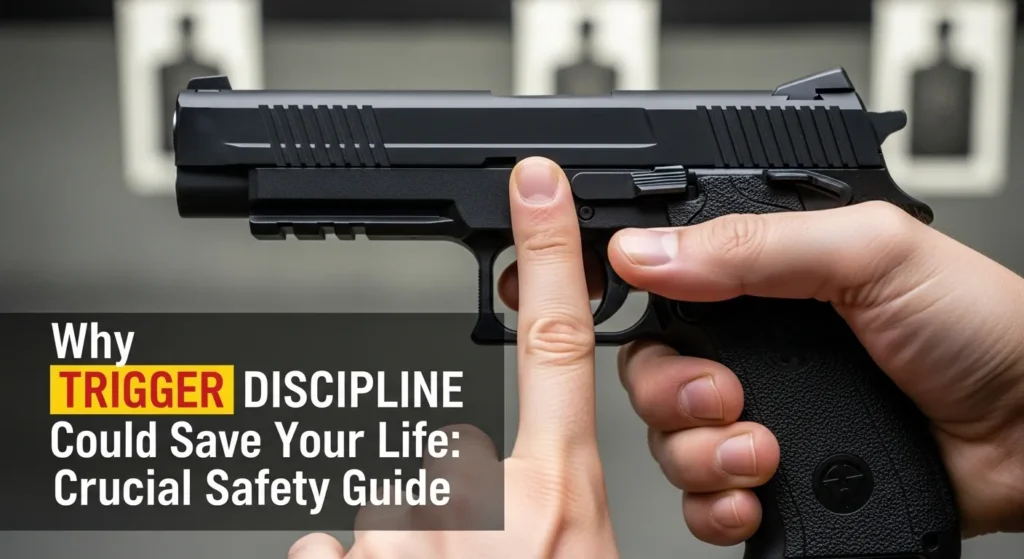
Trigger discipline is the life-blood of firearm safety that could save your life or someone else’s. The numbers are shocking, 47,000 people died worldwide from unintentional firearm incidents in 2013. People could have prevented many of these accidents by using proper handling techniques. Trigger discipline means keeping your finger off the trigger until you’re ready to shoot.
This critical safety protocol ranks among the four cardinal rules of firearm safety. Poor trigger finger placement and inadequate gun discipline cause many accidental discharges. A shooter’s failure to maintain proper trigger discipline can have deadly consequences. Anyone who handles firearms needs to understand the difference between trigger discipline and trigger control, whether they use guns for sport, protection, or professional duty.
Essential Blocks Advanced Heading
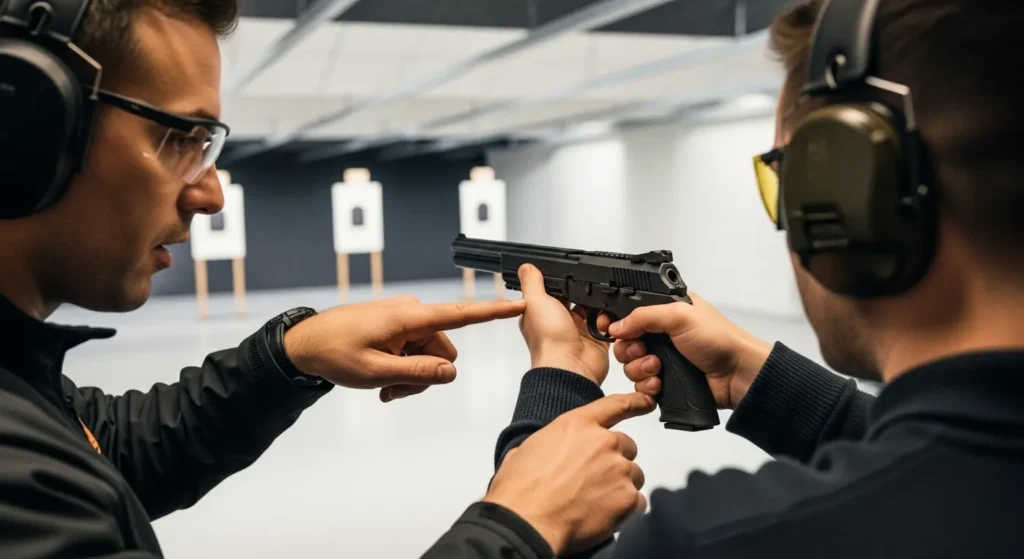
Proper finger placement builds the foundation of safe firearm handling. Trigger discipline is more than just a rule, it’s a life-saving practice that every responsible gun owner needs to master.
What is Trigger Discipline?
Trigger discipline means you need to keep your trigger finger outside the trigger guard and extend it along the firearm’s frame until you’re ready to shoot. This basic safety rule requires shooters to place their index finger next to the frame, parallel to the barrel. This creates a safe distance between the finger and trigger mechanism. New shooters often find this position uncomfortable. The brain wants all fingers to work as one unit when gripping objects. Practice helps overcome this instinct until proper finger placement becomes automatic. Most firearms instructors suggest resting your trigger finger’s pad against the frame or extending it fully alongside the gun. Both methods work well if your finger stays clear of the trigger guard until you decide to fire.
Trigger Discipline vs. Trigger Control
People often mix up these terms, yet they mean different things. Trigger discipline deals with finger placement and safety protocols before shooting. Trigger control focuses on how you work the trigger while firing. Trigger discipline is straightforward, your finger sits either correctly off the trigger or wrongly on it. Trigger control works differently. It involves various skill levels that include pressure, timing, and technique during actual shooting. Your trigger discipline matters before and after shooting, including drawing, reloading, or handling your firearm. Trigger control only applies when you’re actively firing.
Why It Matters in Ground Scenarios
Poor trigger discipline creates problems beyond the shooting range. Modern firearms don’t just “go off”, they need trigger pressure. Almost every negligent discharge happens because someone placed their finger on the trigger wrongly. The body reacts to stress with involuntary responses like the “sympathetic squeeze.” This means sudden events can make your fingers contract without warning. A finger on the trigger during these moments might cause an accidental shot.
Trigger discipline gives you vital decision-making time in self-defense situations. It adds a safety step between spotting a threat and making the final choice to fire. This can prevent tragic outcomes and legal troubles. Proper trigger discipline shows both physical skill and mental focus, it proves your steadfast dedication to safe firearm handling that keeps everyone around you protected.
The Mechanics of Trigger Control
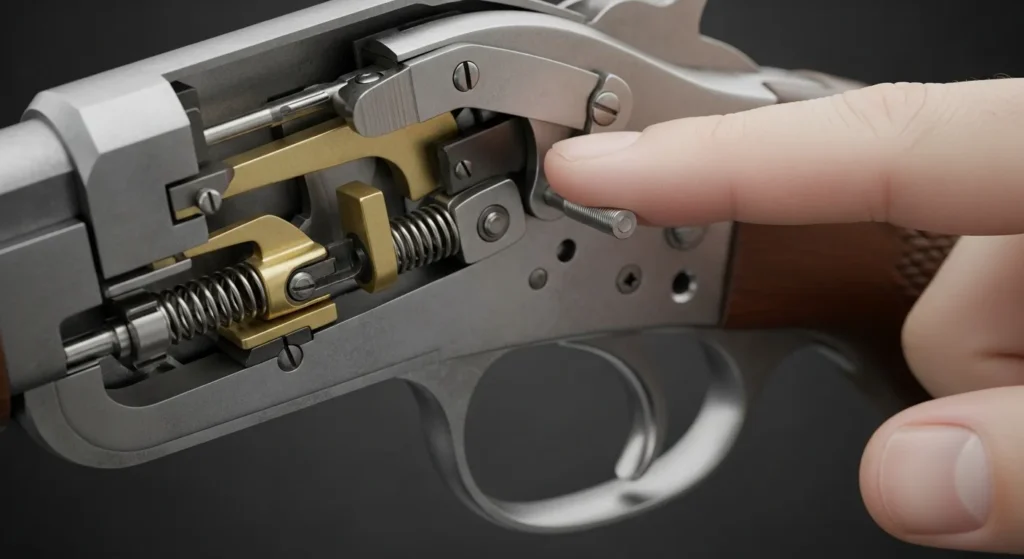
Beyond basic safety principles, you need to understand the physical mechanics behind an accurate shot to master trigger control.
Stages of a Trigger Pull
A shooter must recognize four distinct phases in every trigger pull. The experience starts with pre-travel or take-up, the original movement before resistance. The wall comes next, the point where resistance increases as the sear involves. The break follows when the sear releases and the shot fires. The trigger moves forward just enough to reengage the firing mechanism during the reset phase.
Proper Trigger Finger Placement
You achieve optimal trigger finger placement by maximizing contact between your finger and the trigger’s flat face. The pad of your finger (the fleshy area behind the fingertip) should connect with the center of the trigger. This allows straight rearward pressure without lateral movement. Your hand size compared to grip circumference affects proper placement by a lot. Shooters often struggle to make full contact with oversized grips, while undersized grips can cause overreaching and side pressure.
How Grip Affects Trigger Control
Your grip has a fundamental influence on trigger control effectiveness. The trigger finger must work independently from the rest of your hand. Many shooters think the trigger finger alone causes most accuracy problems, yet changing pressure from other fingers usually moves the gun off target. The answer lies in maintaining consistent pressure with the gripping fingers while keeping the trigger finger movement isolated. You should grip firmly first, then pull the trigger, never do both at once.
Common Mistakes Like Jerking The Trigger
Even experienced shooters make several trigger control errors. Jerking happens when you suddenly yank the trigger, usually from anticipation or timing the shot. Milking occurs when all fingers contract together instead of isolating the trigger finger. Thumbing results from excessive thumb pressure that rotates during firing. Heeling happens when you push forward with the palm heel as the shot breaks. Regular practice helps identify these mechanical errors, especially when you do dry-fire exercises that build proper muscle memory without recoil distractions.
Training for Better Trigger Discipline
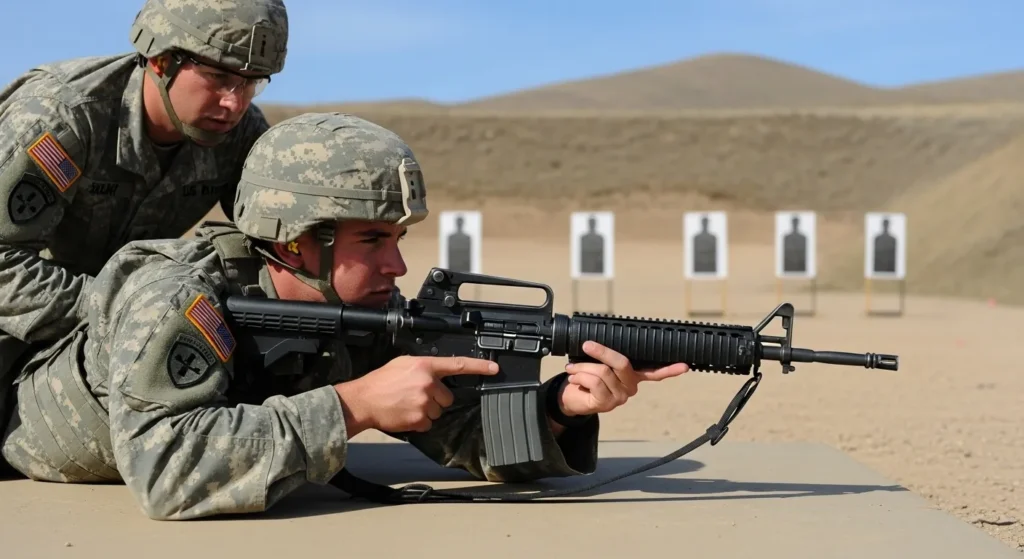
Good trigger discipline comes from dedicated practice and specific exercises that build muscle memory and improve control. Your conscious efforts turn into automatic safety habits with proper training.
Dry Fire Drills For Muscle Memory
Training with an unloaded firearm lets you develop trigger discipline without spending money on ammunition. Always verify your firearm is unloaded and pointed in a safe direction before starting any drill. The “coin balance” drill works great – just place a coin on your barrel and pull the trigger without letting it fall. You’ll quickly spot any flinching or jerking that could throw off your aim. The “load one, shoot two” technique helps identify anticipation problems. Fire a live round and follow it with a dry fire pull. Your muscle memory gets stronger with regular dry practice sessions.
Live Fire Exercises to Test Control
One-handed shooting drills help you prepare for emergencies. Start close to your target (3-5 yards) and practice with both your dominant and non-dominant hands. Switching between strong and weak-hand shooting builds skills for real-life scenarios. Your breath control matters too – take a deep breath, let it out slowly, and take your shot during the second exhale.
Using a Trigger Finger Placement Chart
Your hand size and grip circumference determine the best trigger finger placement. The first joint of your index finger might give you better control with heavy double-action triggers. A finger placement chart shows you the ideal position, your second joint should form a 90-degree angle when the trigger is fully pressed. This visual guide helps you place your finger consistently during practice.
How to Self-Analyze Your Trigger Pull
Start by looking for common mistakes. Right-handed shooters who see shots landing left of center are probably jerking the trigger. Mix dummy rounds with live ammunition to check for recoil anticipation. A gun twitch on dummy rounds means you’re flinching. Laser ammo systems give you instant feedback on your trigger control.
Advanced Concepts and Real-World Application
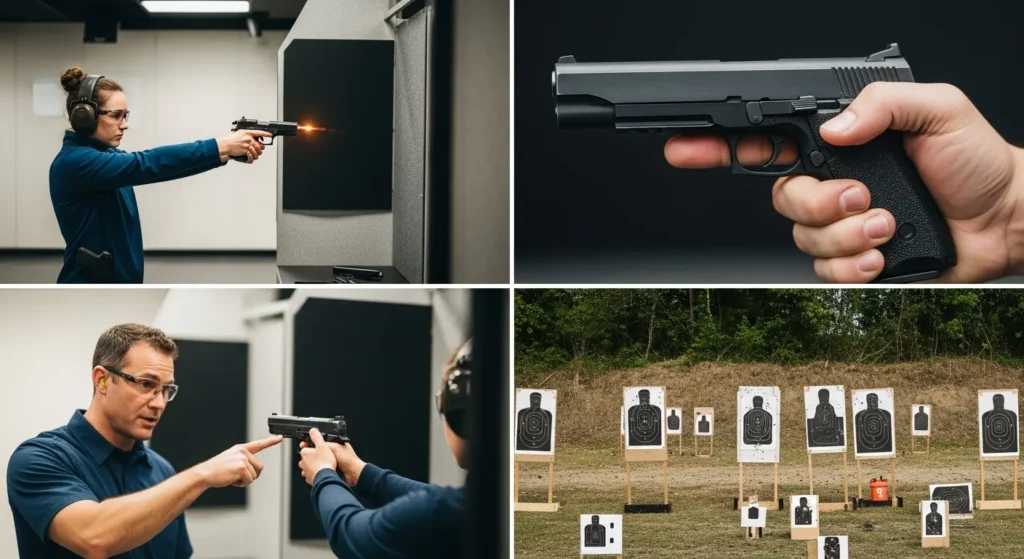
Simple training is just the beginning when it comes to trigger discipline that saves lives. Let’s look at advanced applications through ground applications.
Desert Eagle Trigger Discipline
The Desert Eagle, known for its power and accuracy at long range, just needs exceptional trigger discipline. Moonfighter designed its namesake skin in CS2 to celebrate the concept of strategic patience. This means waiting for the perfect moment instead of firing as soon as you see a target. This approach reflects ground applications where discipline gives you a tactical edge beyond safety.
How bad Trigger Discipline Leads to Accidents
Without doubt, poor trigger discipline remains the #1 cause of accidental discharges. Modern firearms have safety features, but they don’t simply “go off” without trigger input. The sympathetic squeeze can catch even experienced handlers off guard when sudden events cause their fingers to contract involuntarily.
Trigger Discipline in High-Stress Situations
Your trigger discipline becomes severely compromised when heart rate goes beyond 115 BPM in high-stress scenarios. Physical responses like tunnel vision and time distortion make proper firearm handling even harder. The quickest way to curb these effects is to add stress to your training through timed drills or physical activity before shooting.
Integrating Discipline into Defensive Shooting
The rolling trigger technique provides better results than the reset method in defensive situations because stress degrades fine motor skills. The 4-4-4-4 breathing method helps you regain control. You should inhale, hold, exhale, and hold for 4 seconds each to lower your heart rate effectively.
Conclusion
Trigger discipline means much more than a basic safety rule, it’s a life-saving practice that every responsible gun owner needs to master. In this piece, we got into how keeping your finger outside the trigger guard prevents countless accidents that take thousands of lives each year. The difference between trigger discipline as a safety protocol and trigger control as a shooting skill is also clear now. Evidence shows all but one negligent discharge happens because fingers were wrongly placed on triggers. You need to build muscle memory to keep your finger along the frame until you’re ready to fire. This creates a vital checkpoint between assessing threats and making the final choice to shoot.
Good training builds this essential habit. Dry fire exercises work well, especially when you have the coin balance drill that helps shooters spot and fix problems like flinching or jerking. Live fire training in different conditions helps you know how to keep proper form even as situations change. Self-analysis plays a key role too, it lets you spot and fix common errors that affect accuracy and safety. High-stress situations put your trigger discipline to the test. Under pressure, fine motor skills get worse faster as heart rates go above 115 BPM. So stress-based training gets shooters ready for ground scenarios where keeping discipline becomes most challenging, and most vital.
Trigger discipline works as both physical technique and mental commitment. Proper finger placement takes conscious effort until it becomes automatic through practice. This fundamental habit protects you and everyone around you. Remember, firearms don’t just “go off”—they need trigger input. Your discipline stands as the barrier between safe handling and potential risks.
Call us today at 561-213-2974 or email us at Mike@SuburbanProtector.com. You can also follow us on Instagram @SuburbanProtector or Youtube https://www.youtube.com/@SuburbanProtector.
We proudly serve West Palm Beach, Boca Raton, Boynton Beach, Delray Beach, Jupiter, Palm Beach Gardens, Lake Worth Beach, Riviera Beach, Greenacres, Wellington, Royal Palm Beach, Stuart, Sewall’s Point, Jupiter Island, Ocean Breeze,Fort Pierce, Port St. Lucie, St. Lucie Village, and Okeechobee.