House of Worship Security Training in South Florida
For Churches, Synagogues, and Temples Across South Florida
If you are reading this, somebody in your congregation has already raised the question. Possibly at a board meeting, possibly after something happened somewhere else.
You do not need to be convinced that a plan matters. What you need is a way to build one that your leadership will actually approve, your congregation will accept, and your volunteers can carry out.
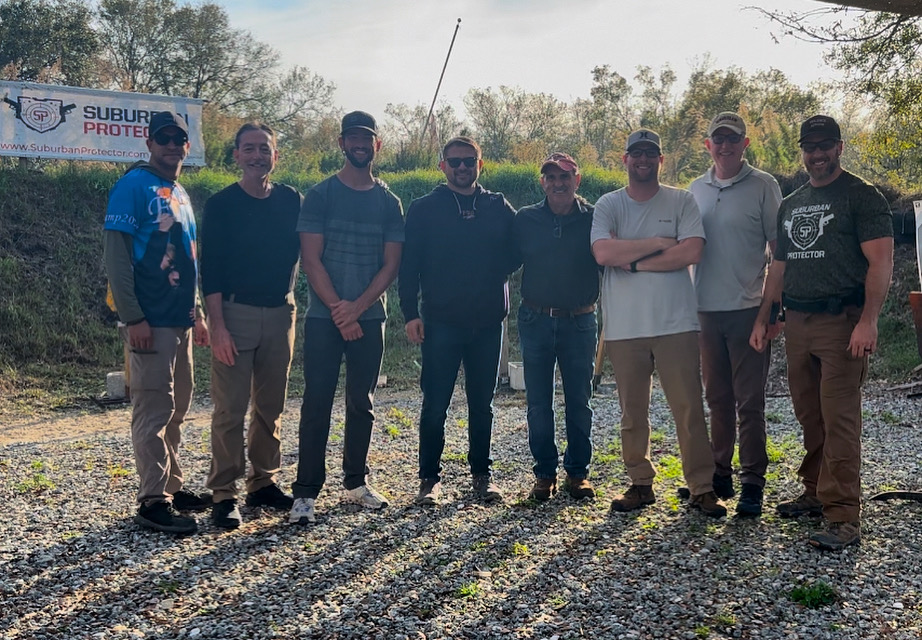
We work with houses of worship of every faith across South Florida on three things: assessing what your building and your people actually need, training the team that will respond, and preparing the congregation that will be in the room.
Or call or text Mike at 561-213-2974
What We Are Not Going to Do Here
We are not going to list incidents or show you statistics you have already seen. You are on this page because you are past that part.
We are also not going to tell you that your congregation needs an armed team. Some do. Some do not. Some need better locks, a greeter who knows what to watch for, and a plan for what happens when somebody walks in mid-service. A security program that starts with firearms and works backward usually ends up solving the wrong problem expensively.
What we will do is look at your building, your services, your volunteers, and your comfort level, and tell you honestly what would actually improve your situation. Sometimes that includes firearm training. Sometimes it does not.
That is an unusual thing for a firearms instructor to say, and it is the reason congregations call us back.
Three Ways We Work With Congregations
Site Assessment
Security Team Training
Congregation Preparedness
We walk your property with you and look at it the way somebody with bad intentions would. Entry points, sight lines, the flow of a service, where children are, where the money is, what happens at the moment of arrival and dismissal. You get a written assessment with specific recommendations ordered by cost and impact.
Most congregations find that the highest-value items on that list cost very little.
For the volunteers who have accepted responsibility for responding. Firearm skills where appropriate, but also communication, positioning, de-escalation, medical response, and the decision-making that has to happen in the seconds before anything else does.
This runs at our range, not at your facility, so your team trains without an audience.
For everybody else. What to do, where to go, how to help, and how not to make things worse. No firearms involved. This is the piece most congregations skip and the piece that protects the most people.
Most congregations start with the assessment. It costs the least, it answers the most questions, and it tells you whether the other two are even necessary.
Or call or text Mike at 561-213-2974
What Security Team Training Covers
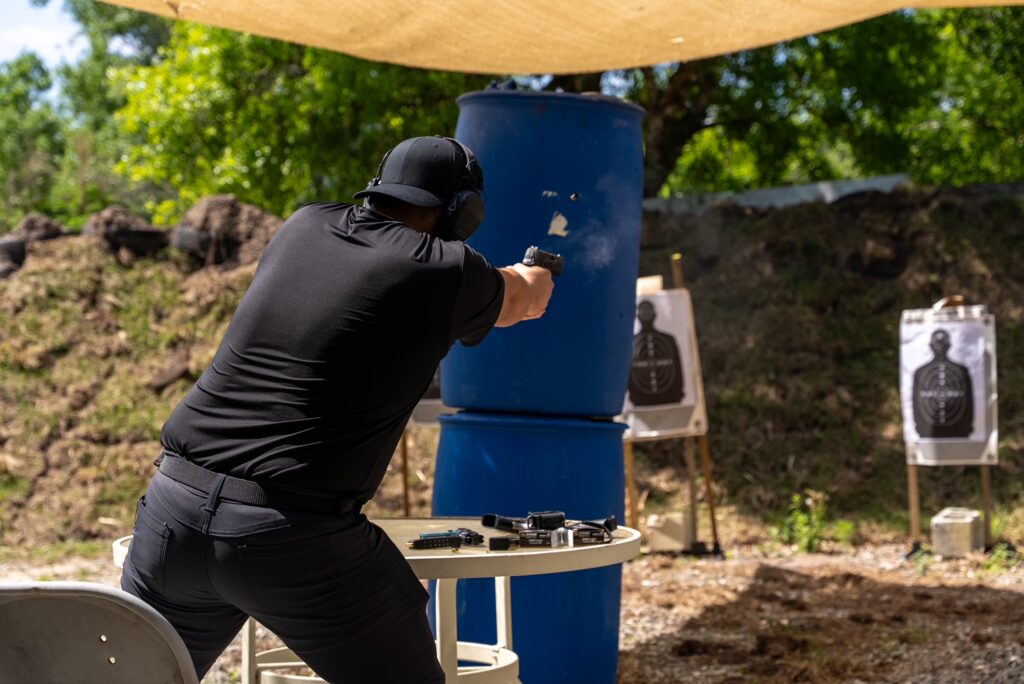
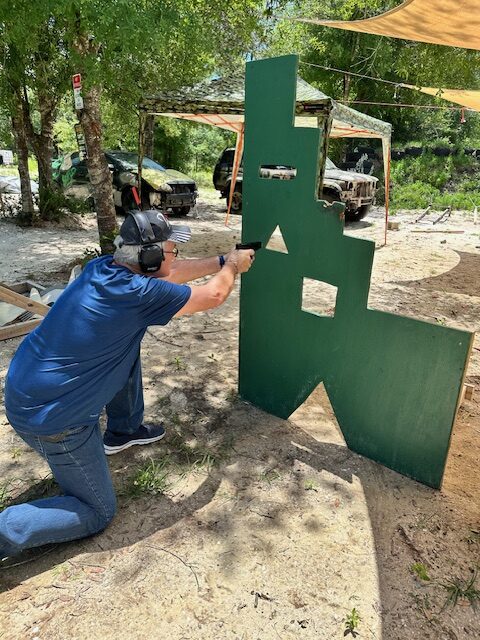
Built for volunteers, not for professionals. Most of the people who end up on a house of worship security team are congregants who raised their hand. They are not former law enforcement and they should not be trained as though they are.
- Firearm fundamentals and defensive shooting. Grip, stance, sight alignment, trigger control, drawing from concealment, and live fire at realistic distances. Built to a standard, not to a certificate.
- Shooting with people behind the target. The single most important difference between defending a house and defending a sanctuary. Accountability for every round, and knowing when the answer is not to fire.
- Positioning and coverage. Where team members stand, what each person is watching, and how coverage changes between the greeting, the service, and dismissal.
- Communication under stress. Getting information across the room without alarming two hundred people, and coordinating without radios if that is what you have.
- De-escalation and threat recognition. Most incidents at houses of worship are not active shooters. They are disruptive individuals, domestic situations that follow somebody to church, and people in crisis. Your team will encounter those far more often.
- Movement inside an occupied building. Hallways, doorways, corners, and a room full of people who are moving in the wrong direction.
- Medical response. Tourniquets, wound packing, and direct pressure. In a mass casualty event, bleeding control saves more lives than anything else a volunteer can do.
- Legal framework. Florida use of force law, what your team can and cannot do, and where the lines are.
Training runs at one of our six ranges depending on what the session requires. Scenario work, movement, and team coordination happen at our private outdoor range in Okeechobee, where there is space to run it properly.
What Congregation Preparedness Covers
No firearms. No range. Ninety minutes in your own building, delivered to whoever wants to attend.
This is the part that makes a security committee’s job easier, because it is the part nobody objects to.
- What to actually do. Run, hide, fight is the framework everybody has heard. We cover what each of those means inside your specific building, which is a different conversation than the generic version.
- Where to go. Exits, rooms that lock, rooms that do not, and the routes people will instinctively take that they should not.
- How to recognize a problem early. Behavior, not appearance. This is the part that prevents incidents rather than responding to them.
- What to do with children. Usually the first question asked and the one people most want answered.
- Basic bleeding control. Hands-on tourniquet and wound packing practice. No medical background required.
- How not to interfere. What your security team will be doing, and how the congregation can help rather than complicate it.
Most congregations run this annually. Attendance tends to be higher than leadership expects, because people want the information and have not known where to get it.
The Legal Question Your Board Will Ask
Florida law on carrying inside a house of worship has changed in recent years, and the answer depends on your specific situation, particularly if your property also houses a school or daycare.
We are not attorneys and this page is not legal advice. What we can do is tell you what the current statutes say, what questions to bring to your insurance carrier, and what other congregations in South Florida have done. Most boards find that the legal picture is clearer than they feared and the insurance picture requires more attention than they expected.
Bring your questions to the initial conversation. If something needs a lawyer, we will tell you that rather than guessing.
How This Usually Goes
Nobody books a security program off a webpage. Here is the sequence that actually happens.
One phone call, thirty minutes. You describe your building, your congregation, your services, and what prompted the question. We tell you what we would look at and roughly what it would involve. No cost and no obligation.
A site walk. We come to your facility and look at it properly. This takes about two hours and produces a written assessment your board can read.
You take it to leadership. The assessment is written to be handed to people who were not on the walk. It gives your committee something concrete to discuss rather than a general sense that something should be done.
You decide what to do. Some congregations implement the low-cost recommendations and stop there. Some start congregation preparedness. Some build a team. All three are legitimate outcomes and we will tell you honestly which we think fits.
Then it becomes ongoing. Teams need recurring training. Plans need revisiting when your building or your services change. Most congregations we work with settle into a rhythm rather than treating this as a one-time project.
Who You Are Working With
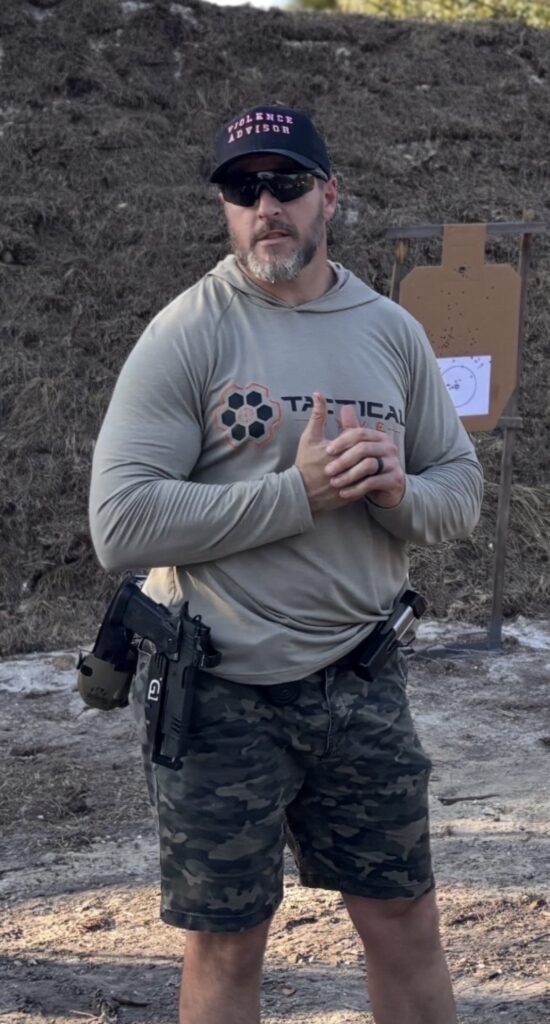
Mike Kneuer has spent twenty-two years carrying a firearm daily and the last several teaching other people how to do it properly. He competes in USPSA, constantly furthers his education by taking other top level instructors courses, and has put thousands of hours in with students ranging from people who had never touched a gun to daily carriers with bad habits they could not see.
A certification is a starting point, not an achievement. It means someone passed a course, and it says nothing about the years since. What Mike brings to your congregation is a working knowledge of what actually goes wrong and how to fix it.
He does not lecture and he does not perform. If what your team is doing works, he leaves it alone. If it does not, he tells you plainly and shows you the fix. Nobody gets yelled at and nobody gets talked down to.
- NRA Certified Pistol Instructor
- Tactical Hyve Level 1 Instructor
- Stop the Bleed Instructor
- USCCA Member
- USPSA Competitor
- 22 Years Concealed Carry
Mike has worked with congregations across South Florida, including several that were not sure they wanted an armed team and one that decided they did not. Suburban Protector is a Florida 501(c)(3) nonprofit, which means nobody here is working on commission and nobody benefits from selling you more program than you need.
Questions Congregations Ask
No, and some congregations should not. Plenty of what improves security at a house of worship has nothing to do with firearms. We will tell you honestly what we think your situation calls for, including when the answer is that you do not need an armed team.
It depends on scope. A site assessment, security team training, and congregation preparedness are priced separately, and most congregations start with just one. Call and describe your situation and we will give you a number before you take anything to your board.
In most circumstances yes, with important exceptions depending on your property, particularly if a school or daycare shares it. We will walk you through the current rules and tell you when a question needs an attorney rather than us.
This is the question boards ask most and it deserves a real answer. Your insurance carrier will have a position on armed volunteers, and it is worth knowing that position before your board votes rather than after. We will tell you what to ask them.
Frequently. Congregation preparedness training is often the right starting point precisely because nobody objects to it. It builds shared understanding and makes the harder conversation easier later. Some congregations never go further than that and are better off for having done it.
Both. Site assessments and congregation preparedness happen at your building. Firearm and scenario training happens at our range, which keeps live fire away from your property and gives your team room to work without an audience.
All of them. We have worked with Christian, Jewish, and Muslim congregations across South Florida. The building is different, the service is different, and the specific concerns are different. The approach is the same.
Whatever your congregation can sustain. We have worked with teams of three and teams of fifteen. What matters more than headcount is whether they train together consistently.
No, and this is worth being direct about. A Florida concealed weapon license requires minimal demonstrated skill and no training in shooting around people, coordinating with a team, or operating inside an occupied building. Those are the things that matter in your sanctuary.
Teams that train once never keep the skill. Quarterly is realistic for most volunteer teams. Congregation preparedness runs well annually.
Yes. We work across the Treasure Coast and into Martin, St. Lucie, and Okeechobee counties. Tell us where you are.
Start With a Conversation
Thirty minutes on the phone, no cost, and no obligation. You describe your situation and we tell you what we would look at.
Most congregations find that call clarifies more than six months of committee discussion did.
Or call or text Mike at 561-213-2974
PALM BEACH COUNTY: West Palm Beach, Boca Raton, Boynton Beach, Delray Beach, Wellington, Royal Palm Beach, Palm Beach Gardens, Lake Worth Beach, Jupiter
BROWARD COUNTY : Fort Lauderdale, Coral Springs, Pompano Beach, Deerfield Beach, Tamarac, Margate
MARTIN COUNTY: Stuart
OKEECHOBEE AREA: Okeechobee, Fort Pierce
Can’t travel to our Okeechobee range? No problem. We bring professional firearm training to Palm Beach County and Broward County at convenient local range locations. Wherever you are in South Florida, expert gun training is close.