Protector Courses: Two Levels of Defensive Pistol Training
Held at Our Private Outdoor Range in Okeechobee, Florida
Two courses, taken in order. Level 1 builds the mechanical foundation. Level 2 puts it under pressure.
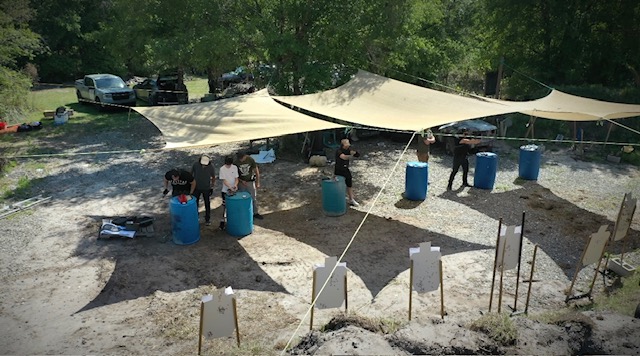
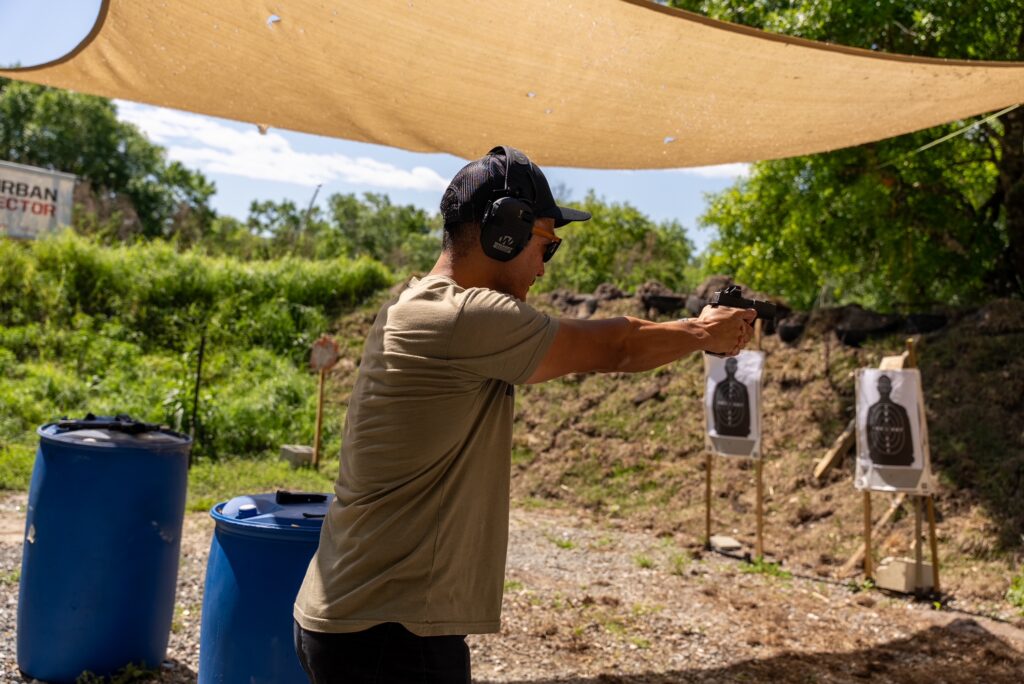
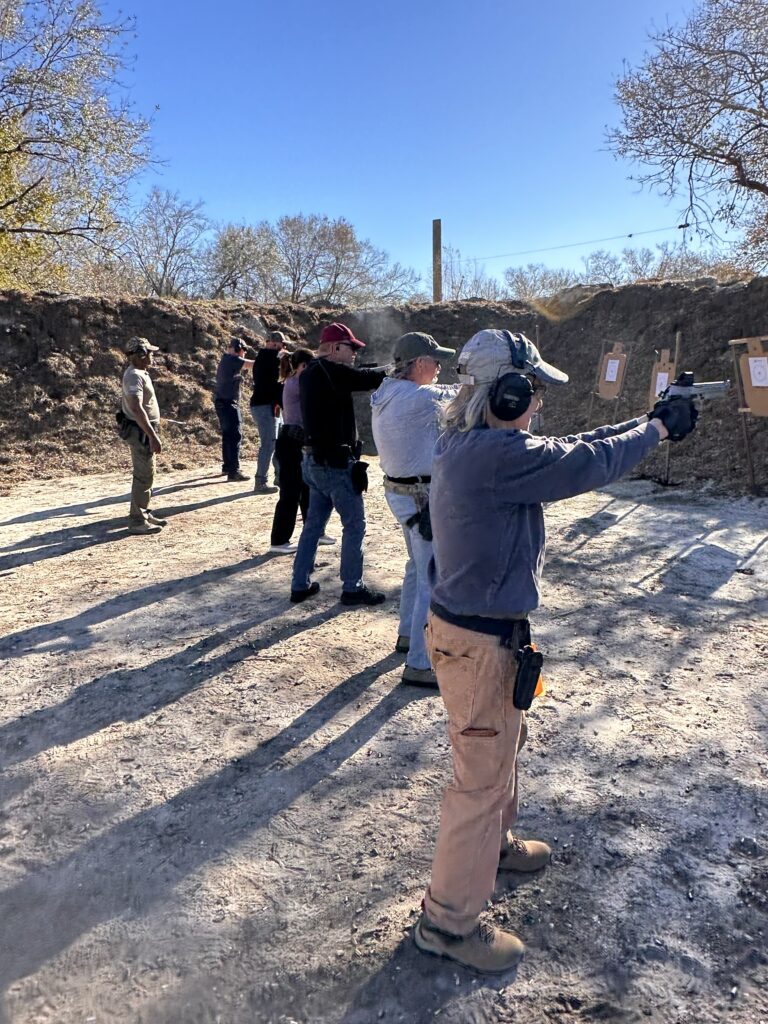
Both run at our private 1.25 acre outdoor range in Okeechobee, which is the only place we can do this work. No indoor lane in South Florida lets you draw from a holster, move while shooting, or run a scenario around a vehicle. We have the space, the berms, and the freedom to train the way this actually needs to be trained. Small groups, capped at 10 students. NRA certified instruction. You will shoot a lot and stand around very little.
Each course is $200, three hours, at our private outdoor range in Okeechobee.
Or call or text Mike at 561-213-2974
Why These Courses Are Only Offered in Okeechobee
Indoor ranges have rules, and the rules exist for good reasons. You cannot draw from a holster. You cannot move laterally. You cannot shoot from behind cover or engage more than one target. Most will not let you fire faster than one round per second.
Every one of those restrictions removes something these courses are built to teach.
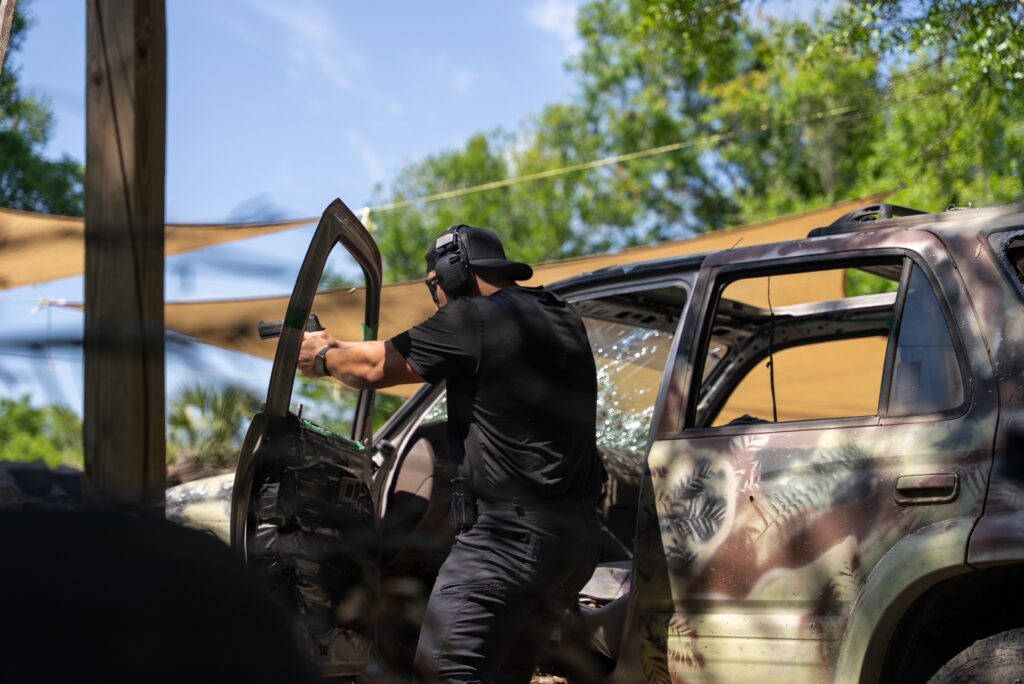
Our Okeechobee range is 1.25 acres of private property with a wrap-around berm, training vehicles, steel targets, and barricades. It is roughly an hour and thirty minutes from Boynton Beach and about 2 hours from Fort Lauderdale. That drive is the price of training you cannot get closer to home, and every student who makes it says the same thing on the way out.
Protector Level 1: Pistol Fundamentals
Three hours. $200. Ten students maximum.
Most gun owners learned to shoot from whoever handed them their first firearm. A friend, a relative, or an afternoon in a rented lane with nobody watching. That is how bad fundamentals get installed, and bad fundamentals do not stay small. They get worse under stress, they get harder to break the longer you carry them, and they are the reason your groups open up when the timer starts.
Level 1 is where that gets fixed. Three hours, hands-on from the first minute, with an instructor correcting you in real time rather than lecturing at you.
What Level 1 Covers
- Stance. How your body position affects every round you fire, and why the stance that feels natural often is not the one that works.
- Grip. The fundamental most shooters get wrong and never know it. This one change fixes more problems than anything else on this list.
- Sight alignment. What your eyes actually do under pressure, and how to work with that instead of against it.
- Trigger control. The single largest cause of missed shots. If your rounds pull low and left, this is why.
- Multiple target transitions. Moving from one target to the next without losing your grip or your sights.
- Loading, unloading, and clearing malfunctions. Handled until it stops requiring thought.
- Range safety and handling protocol. Covered properly rather than recited.
- A personal debrief. What improved, what still needs work, and a specific practice plan you can take to any range.
Who Protector Level 1 Is For
Complete beginners who just bought a firearm and want to start correctly instead of undoing habits later. And intermediate shooters who know something is off, cannot diagnose it themselves, and want a trained eye on it.
Both groups leave shooting better. The beginners leave without a decade of bad habits to unlearn.
What to Bring
Bring your firearm if you own one. If you don’t, we provide one at no charge. There is no rental fee for our courses, so not owning a gun is never the thing that keeps you off the range.
Bring ammunition, or buy it from us when you get there. Either works, and you don’t need to decide in advance.
Wear closed toe shoes and a shirt with a high neckline. Hot brass finds its way into open collars, and it will ruin your afternoon faster than anything else on the range. Long pants are a good idea for the same reason.
Eye and ear protection is provided. So are targets. If you have your own electronic muffs, bring them, since they let you hear instruction between strings.
Protector Level 2: Defensive Skills Under Pressure
$200. Ten students maximum. Level 1 or equivalent experience required.
A Florida concealed carry permit proves you completed a course. It does not prove you can draw from concealment with your heart rate at 140, or move to cover while making a shoot decision, or clear a malfunction without looking at your hands.
Most permit holders in South Florida have never done any of those things. That gap between what you believe you would do and what you would actually do is what Level 2 exists to close.
This is the hardest course we run. You will be moving, you will be under time pressure, and you will make mistakes. That is the design. The mistakes you make here are the ones you will not make when it counts.
What Level 2 Covers
- Drawing from a holster, open and concealed. The draw is where most carriers are slowest and least practiced, because no indoor range in South Florida will let you do it. You will do it here until it stops being a sequence of steps you have to think through.
- Shooting while moving. Standing still is a choice you may not get. Lateral movement, moving off the line of attack, and hitting what you are aiming at while your feet are working.
- Using cover and concealment against multiple targets. The difference between the two matters more than most people realize, and knowing which one you are behind changes what you should do next.
- Tactical reloads and malfunction clearing under pressure. Both are simple on a bench and neither stays simple when your hands are shaking. Repetition until they run without you watching them.
- Threat recognition and shoot / no-shoot decisions. The hardest skill on this list and the least trained. Deciding not to fire is a decision you have to practice making, same as any other.
- Close quarters work and one-handed shooting. What happens when the distance closes to arm’s length, and what you do when one hand is occupied opening a door, holding a phone, or moving someone behind you.
- Scenario training. Home invasion, vehicle encounters, and other situations built to look like something rather than a lane with a paper target in it.
- Stress inoculation. Drills designed to spike your heart rate before you shoot, because the version of you that shoots calmly at 70 beats per minute is not the version who shows up when it matters.
Who Level 2 Is For
Concealed carry holders who want to be prepared rather than just permitted. Level 1 graduates ready for the next step. And experienced shooters who have hit the ceiling of what static range work can teach them.
Required Gear
This is an equipment-intensive course by design. You need a holster, at least three magazines, and a magazine carrier. Bring your own carry gear, because training in the rig you actually wear is the entire point.
Which Course Should You Take?
Start with Level 1
If you have never had formal instruction, your groups are inconsistent, or you have been shooting a while but nobody has ever watched you do it.
Start with Level 2
If you have solid fundamentals, you carry regularly, and you have drawn from a holster before under supervision.
Not sure?
Call us at 561-213-2974. Two minutes on the phone tells us more than any description on a page. Most people who ask this question belong in Level 1, and there is no shame in that. Level 1 is where the shooters who are good became good.
What a Day at the Okeechobee Range Looks Like
You arrive, we do a safety briefing, and nothing gets loaded until everyone has heard it.
Then you shoot. The format is explain, apply, correct, repeat. Nothing is demonstrated at length and nothing is theoretical. If a principle takes two minutes to explain, you spend the next twenty applying it while somebody watches and tells you what your hands are doing that your eyes cannot see.
Ten students maximum means you are never waiting in a line of twenty people for your turn on the firing line. You will shoot a meaningful amount of ammunition.
You leave with a debrief. Not a certificate and a handshake, but a specific list of what improved, what still needs work, and what to practice at whatever range is closest to you.
Who You Are Training With
Mike Kneuer has spent twenty-two years carrying a firearm daily and the last several teaching other people how to do it properly. He competes in USPSA, keeps taking courses from instructors better than he is, and has put thousands of hours in with students from first-timers to daily carriers with habits they could not see.
He does not lecture and he does not perform. If what you are doing works, he leaves it alone. If it does not, he tells you plainly and shows you the fix. Nobody gets yelled at and nobody gets talked down to.
- NRA Certified Pistol Instructor
- Tactical Hyve Level 1 Instructor
- Stop the Bleed Instructor
- USCCA Member
- USPSA Competitor
- 22 Years Concealed Carry
The Protector Courses exist because Mike got tired of watching capable people plateau. Fundamentals get you consistent. Pressure shows you what your fundamentals are actually worth. These two courses cover both, in that order, and the Okeechobee range is where that becomes possible.
What Students Say
“Standing and shooting at the range doesn’t even slightly compare to this. You’ll learn real life drills and skills that you hope to never use but you need to know.”
Brandon W.
“Participating in a training session at Suburban Protector was an amazing experience! The hands-on approach and the emphasis on real-life scenarios were incredibly impactful. I learned so much about personal safety, situational awareness, and responsible firearm handling. The instructors were knowledgeable and supportive, making sure everyone got the most out of the training.”
Paco B.
“So many good things to say about this experience! Mike is super knowledgeable and talented. Made me feel safe using a gun in multiple real life scenarios and I’m so lucky to have found this gun training. I am now extremely comfortable with my concealed carry and would recommend that anyone willing to learn to go train with Suburban Protectors.”
Jack M.
“I came in as a complete beginner with zero experience and honestly a little nervous, but the team at Suburban Protector made me feel comfortable right away. They explained everything clearly, were very patient, and focused on real-world safety and confidence. By the end of the session, I felt way more capable and informed. Highly recommend for anyone starting from scratch.”
Lorne S.
Common Questions About the Protector Courses
Not necessarily, but you need the fundamentals Level 1 teaches. If you have had formal instruction elsewhere and you have drawn from a holster under supervision, you can start at Level 2. If you are unsure, call and describe your experience honestly. Starting in the wrong course wastes your money and slows down the group.
Roughly an hour and 30 minutes from Boynton Beach, about 2 hours from Fort Lauderdale, and around an hour from Wellington. Students drive it from all over South Florida because there is no closer alternative that allows this kind of training.
Bring at least 200 rounds for Level 1 and 300 for Level 2. Ammunition is available for purchase at the range if you would rather not haul it.
No. For Level 1 we offer firearms for use. For Level 2 you must have your own firearm, holster, magazines, eye and ear protection.
We train in Florida, so light rain is part of it. If conditions are genuinely unsafe we reschedule you at no charge.
Ten maximum. Sessions fill, and weekends fill first.
Yes, and people often do. Book together so we can seat you in the same session.
Book Your Protector Course
The gap between owning a firearm and being able to run one under pressure does not close on its own. Range trips do not close it, because nobody is watching. A permit does not close it, because a permit tests paperwork.
These courses close it. Level 1 gives you the mechanics. Level 2 takes those mechanics and puts them under the kind of stress that shows you what you actually have.
Ten students per session, and the outdoor range books further out than anything else we run.
Or call or text Mike at 561-213-2974