
Buying a gun takes an afternoon. Carrying it every day is a standing claim that if something happens, you can do something useful about it. That claim has an expiry date, and it is shorter than most people think. Skills decay. Not dramatically, and not all at once, but steadily enough that a carrier who last trained eight months ago is carrying on the memory of competence rather than the thing itself.
This is a realistic answer to how often you should train. Not the aspirational answer, which nobody follows, and not the dismissive answer, which gets people hurt.
Key Takeaways
- Dry fire two or three times a week matters more than any range schedule. It is free, it takes ten minutes, and it is where the perishable skills actually live.
- Live fire once or twice a month, around 100 rounds, is a realistic floor for someone carrying daily.
- Going to the range is not training. Shooting without a plan or a standard is recreation with a receipt.
- The draw decays fastest. If you only maintain one thing, maintain getting the gun out cleanly.
- If your schedule collapses, drop range trips before you drop dry fire. Most people do the reverse.
Carrying daily creates a real obligation
A firearm does not make you safer on its own. It makes a specific set of responses available to you, and only if you can execute them under stress, with the gear you actually wear, on a day you did not expect.
That is not a reason for anxiety. It is a reason for a schedule. The person who trains a little, consistently, for years will be far more capable than the person who takes one excellent two-day course and then nothing for three years. Frequency beats intensity for retention, and it is also the cheaper option.
Range visits and training are different activities
This is the distinction that explains why people plateau for years.
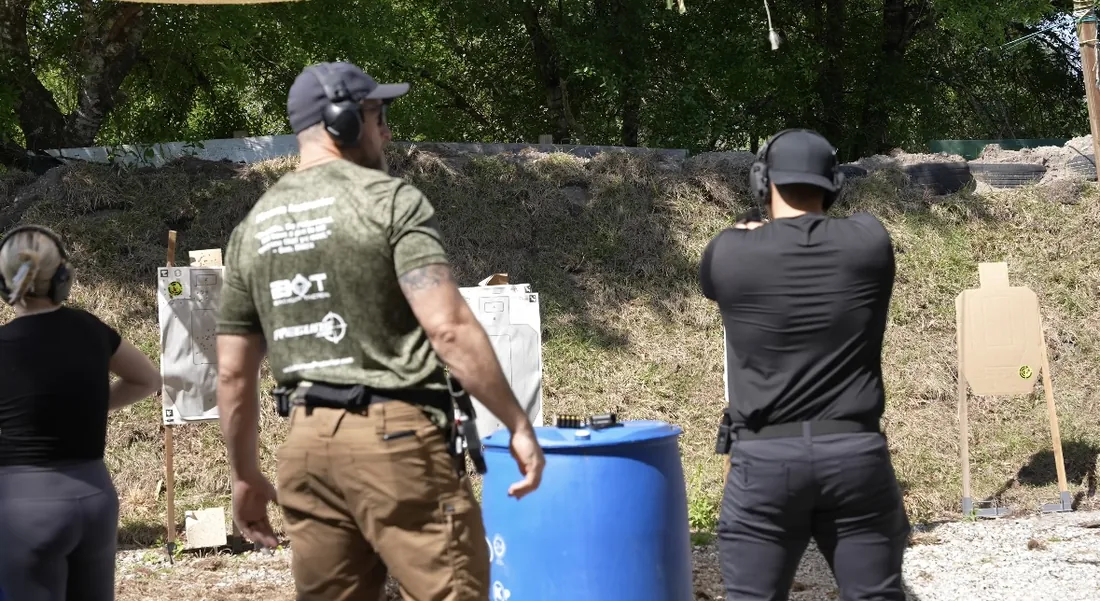
You bring a box of ammunition, hang a target at seven yards, shoot until the box is empty, look at the holes, and go home. Enjoyable. Builds almost nothing after the first few months.
You arrive with two or three specific things to work on, a standard that defines pass or fail, and a way to record the result. You leave knowing whether you improved.
No ammunition, at home, ten minutes. Builds grip, presentation, trigger press and reloads. Where most actual skill is acquired, and the part nearly everyone skips.
The difference is not effort or ammunition. It is whether there was a standard you could fail. We laid out three drills that have one in the three drills every new shooter should run, and a benchmark worth repeating in the Bill Drill.
A realistic schedule
If you carry every day
- Dry fire, 2 to 3 times a week, 10 minutes. Grip, presentation from concealment, trigger press, reloads. Non-negotiable, and the cheapest thing on this list.
- Live fire, once or twice a month, 100 rounds. One benchmark drill at the start, then two or three specific skills, then stop.
- A timed benchmark monthly. Same drill, same distance, logged. This is how you find out whether any of the rest is working.
- Formal instruction, once or twice a year. Someone who can see what you cannot. Everyone develops blind spots, including instructors.
- Carry gear check, monthly. Rotate carry ammunition, check the holster for wear, confirm the magazine springs are not sitting compressed for years.
That is roughly 30 minutes a week of dry practice and one or two range trips a month. It is not heroic. It is achievable alongside a job and a family, which is the only kind of schedule that survives contact with real life.
Dry fire safety, every single time
- Magazine out first, then the chamber. Reversing the order is how people chamber a round while trying to unload.
- Look into the chamber, then put a finger in it. Your eyes see what they expect. Your finger does not.
- All ammunition out of the room. Loose rounds, loaded magazines, the box on the shelf. Out, and close the door.
- Aim at something that would stop a bullet. An exterior masonry wall, not a partition wall and not the floor if someone lives below.
- Say out loud when you start and when you finish. The negligent discharge nearly always happens on the rep after the last rep.
What decays, and how fast
Not everything fades at the same rate, which is useful because it tells you what to protect when time is short.
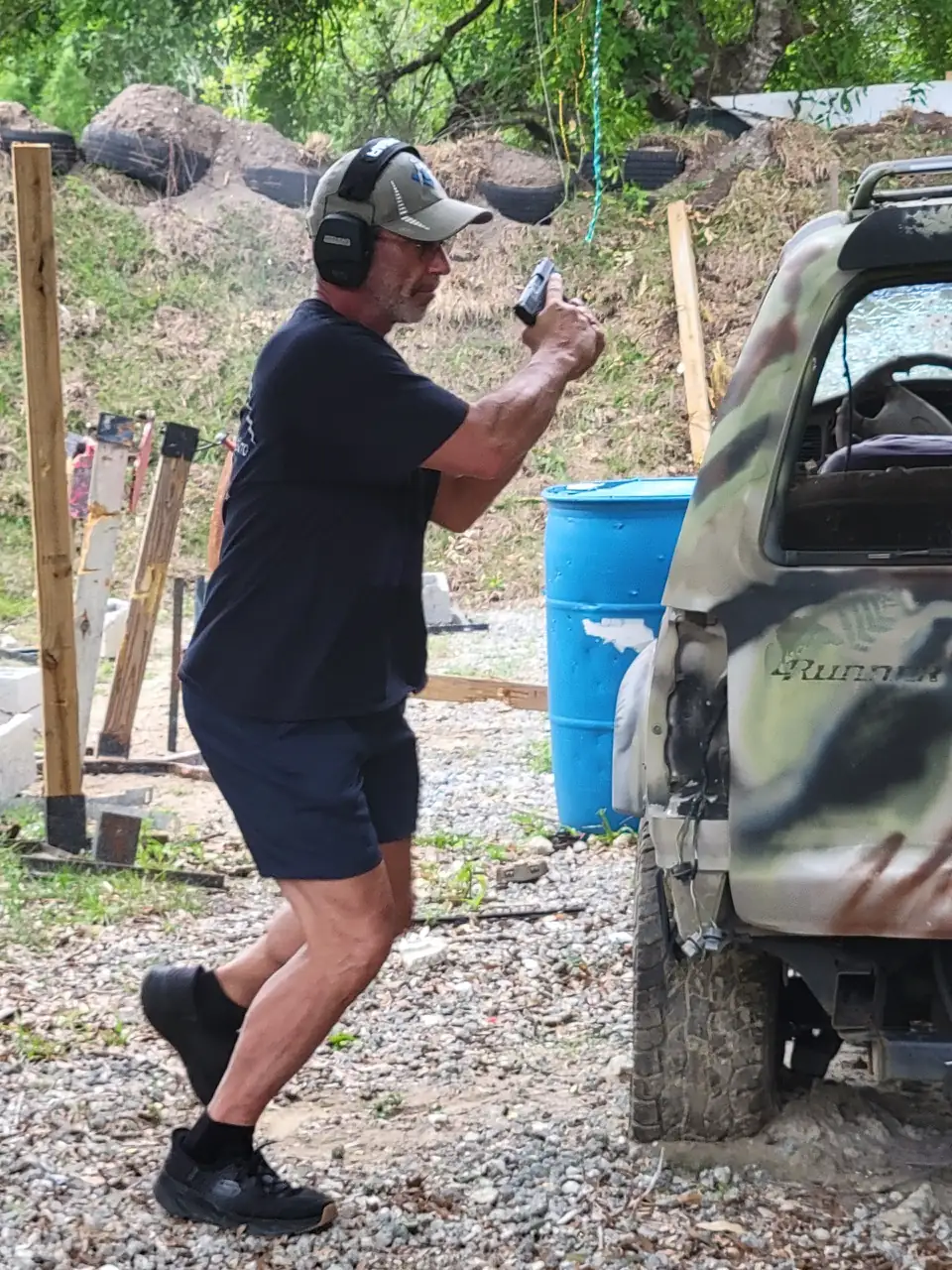
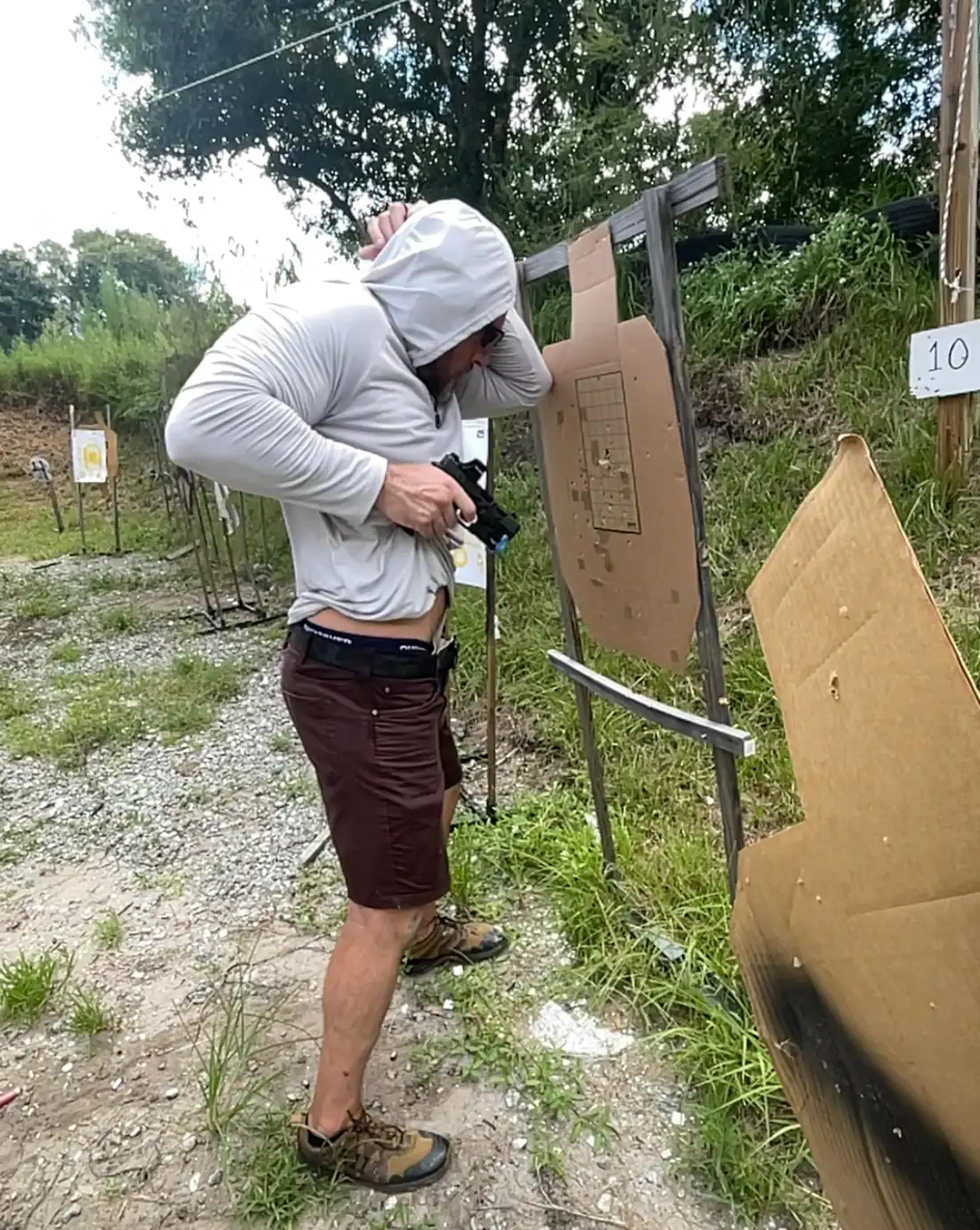
The draw from concealment. A complex motor sequence under a garment. Noticeably slower after a few weeks without practice, and this is the one that is free to maintain.
Reloads. Same reason. Pure repetition, entirely trainable dry, and embarrassing to discover you have lost on a range day.
Recoil management and splits. Needs live fire to maintain properly, which is the honest argument for the monthly range trip.
Marksmanship at slow fire. Holds up reasonably well. It is also the thing most people spend their whole range trip on, which is the mismatch.
The uncomfortable arithmetic: the skills that decay fastest are the ones you can maintain for free, in your living room, in ten minutes. The skills that need the range and the ammunition are the ones that hold up best. Most carriers do it exactly backwards, spending money on the durable skills and neglecting the perishable ones.
What a 100-round session looks like
A monthly session with a plan
- 10 rounds warm-up. Slow fire at five yards. Confirm the gun and your grip are working.
- 30 rounds benchmark. The same timed drill every month, so the numbers compare. Record it before fatigue sets in.
- 40 rounds on one weakness. One. Whatever the benchmark just exposed. Not a tour of everything you can do.
- 15 rounds carry ammunition. Confirm your actual carry load feeds and shoots to the same place as your practice ammunition.
- 5 rounds to finish clean. End on a good repetition rather than a tired one.
Then stop, even if you have ammunition left. The last twenty rounds of a long session are usually the worst of the day, and they are the ones your hands remember.
When life gets in the way
It will. The question is what you cut.
Cut the range trip before you cut dry practice. A month of ten-minute dry sessions and no range time will leave you sharper than one range trip and nothing else. That is counterintuitive, because the range trip feels like the real training and the dry practice feels like a rehearsal, but the retention data points the other way.
And if you have genuinely done nothing for six months, do not try to make it up in one session. Go back to slow fire, confirm the fundamentals, and rebuild. Attempting speed work on rusty mechanics is how people develop habits that take a year to remove.
Frequently asked questions
Does shooting at an indoor range count as real training?
It can, if you arrive with a plan and a standard. Most indoor ranges restrict drawing from the holster and rapid fire, so you will be limited to marksmanship and slow pairs. That is still worthwhile, it is just not the whole picture. Holster work and movement need an outdoor bay like our Okeechobee range.
How many rounds per month is enough?
Around 100 to 200 for a daily carrier, assuming you are also dry practicing. Below 50 and you are maintaining very little. Above 300 without a plan and you are mostly buying brass. We went into the detail in how many rounds a session actually needs.
Should I train with my carry ammunition?
Shoot enough of it to confirm it feeds reliably and hits where your practice ammunition hits, which is usually 15 to 20 rounds a few times a year. Training with it exclusively is expensive and unnecessary. Never training with it is a genuine gap.
Is competition a substitute for defensive training?
It is excellent for gun handling, speed and performing under pressure, and those transfer. It does not cover awareness, decision-making, or the legal and medical aftermath. Treat it as a strong supplement rather than a replacement. The parts it misses are covered in situational awareness and trauma training.
How do I know if my training is actually working?
Because you wrote the numbers down and they moved. Without a logged benchmark you are relying on how the session felt, and how it felt is not evidence. One timed drill a month, same conditions, recorded.
How do I find an instructor worth paying?
Ask specific questions and see whether you get specific answers. We set out exactly what to ask in how to vet a firearms instructor in Palm Beach County, including the questions you should ask us.
Build a schedule you will actually keep
Most people do not need more motivation. They need a plan that fits a real week and someone to check the mechanics occasionally. That is most of what we do.
Notes and further reading
- National Shooting Sports Foundation, Rules of Firearms Safety
- Skill decay rates vary by individual and by skill. The ordering above reflects what we see in students returning after a break, not a controlled study.
- Range rules on holster work and rapid fire differ by facility. Confirm before planning a session around them.
This article is general firearms training information, not legal advice and not a substitute for hands-on instruction. Dry practice involves handling a firearm you believe to be unloaded, which requires the verification routine above every time. Follow your range’s rules and your manufacturer’s instructions, and seek qualified instruction before practicing unsupervised.
Firearms training in Palm Beach and Broward County
Suburban Protector runs NRA-certified private and small-group firearm instruction across South Florida, including West Palm Beach, Boca Raton, Delray Beach, Boynton Beach and Wellington, with county pages for Palm Beach County and Broward County.
Ongoing skill work runs through the Protector courses, with speed and movement at our Okeechobee range. Call or text 561-213-2974.